tour schedule:
Year - 2027
Departure Date - sep 24
Return Date - oct 11
This Tour Is Open -
Tour Type - Railfan
tour pricing:
$7,895 - Double Room Occupancy
$1,595 - Single Room Supplement
$2,500 - Deposit To Hold Space
-$300 - Early Bird Discount
book by oct 15, 2026
Final Payment Due By -June 24, 2027
Tour Highlights:
* 24 meals
* Cajon Pass
* 34 train rides
* Fully escorted
* Williams Loop
* Tehachapi Loop
* Keddie Wye Bridge
* Visiting 35 railroads
* Feather River Canyon
* Visit 12 railroad museums
* Central Coast Railroad Festival
tour lodging:
3 star Sonesta Select LAX Hotel
Los Angeles
3 star Quality Inn & Suites
Oceanside
3 star The Dextro by Best Western Little Italy
San Diego
3 star Best Western Cajon Pass Inn
Cajon Pass
3 star Best Western Desert Winds
Mojave
3 star Sure Stay Hotel
Tehachapi
3 star Aiden Los Angeles Downtown Dragon Gate
Los Angeles
tour lodging:
3 star Sands Inn & Suites
San Luis Obispo
3 star Best Western Plus Airport Plaza Hotel
San Jose
3 star La Quinta Inn & Suites Fairfield-Napa
Fairfield
2 star Sierra Motel
Portola
3 star Best Western Plus Heritage Inn
Stockton
3 star Gunn House Hotel
Sonora
3 star Holiday Inn Express Fisherman's Wharf
San Francisco
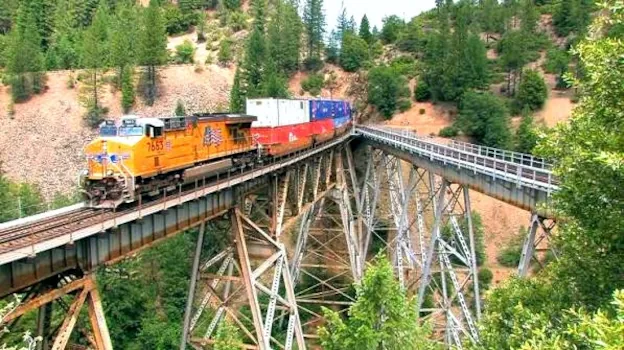
The Famous Keddie Wye Bridge In The Feather River Canyon
California’s rail network blends foundational freight corridors, sprawling urban commuter systems, and expansive intercity passenger routes. Supported by historic Class I railroads, it moves millions of tons of goods from vital ports to inland warehouses, while high-speed and scenic lines drive modern regional transit and tourism.
California’s freight operations primarily rely on two major Class I railroads alongside a network of regional and short-line operators, moving goods from the ports of Los Angeles, Long Beach, and Oakland across the country. The BNSF Railway and Union Pacific Railroad own the vast majority of mainline tracks in the state. There is approximately 80 different railroad operations in the state of California operating on roughly 4,985 miles of track. Transit & State-sponsored and regional passenger services provide daily transit options across metropolitan hubs and long-haul scenic stretches.
This tour is a detailed photo study of most of the railroads and some museums beginning in Southern California and working our way to Northern California. Some of the popular and well known locations that will be visited include Cajon Pass, Tehachapi Loop, Donner Pass, Feather River Canyon, and the Keddie Wye Bridge and a lot more. We have packed in as much railroad and train action as possible in our 18 day tour. To cover the same action on your own would take you a lot longer. Our guide for this tour was born and raised in California and has been railfanning most all of these locations for over close to 60 years.
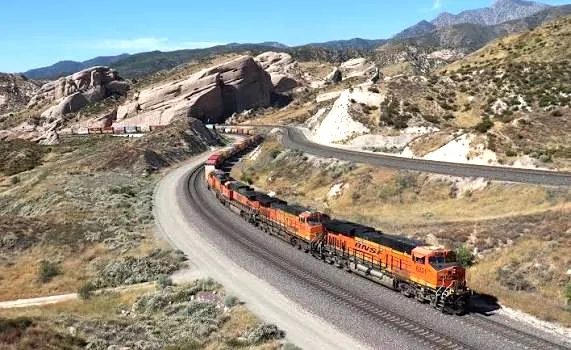
Sullivan’s Curve In Cajon Pass
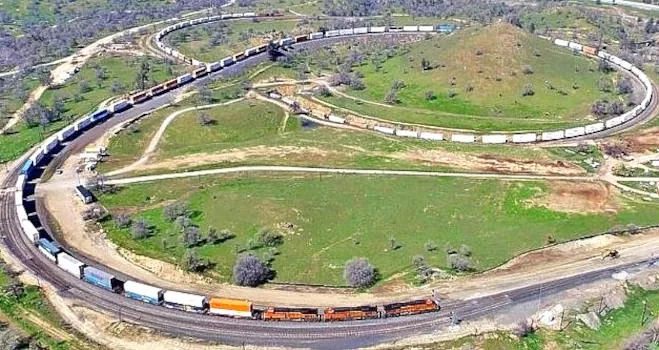
The Famous Tehachapi Loop In Southern California
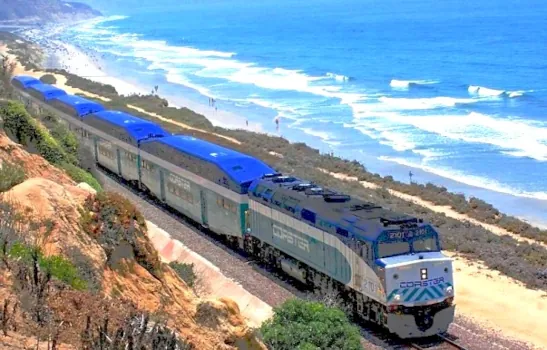
The North County Transit District's Coaster Commuter Train
running along the Pacific Ocean south of Oceanside
Individual arrivals in Los Angeles. If arriving by air the Sonesta Select Los Angeles LAX Hotel offers a free airport shuttle service to the hotel. Check-in at the 3 star Sonesta Select LAX Hotel. Your guide will meet everyone in the lounge bar for a welcome drink at 6:00pm and to go over tomorrow's tour itinerary. Our hotel does have a restaurant. Please take note that this weekend is the three day Labor Day Weekend holiday and flights and trains tend to fill up fast. Once we call this tour a sure-go do not wait too long to make your travel reservations.
🍽 none
We have a busy day today and an early start. After breakfast at the hotel restaurant (Not included) we will transfer at 6:00am to the near-by C Line of the Los Angeles Metro Light Rail. We will take a C Line train to the connection with the A Line and take a ride out to Long Beach. The A Line happens to be the longest light rail line in the World at 57.7 miles. Once we reach Long Beach we will return on the next train back to Los Angeles and get off at the Bunker Hill Station in the downtown area of the city.
From the LA Metro Station it is a short walk to the historic Angeles Flight Railway which went into operation in 1901. It is a short and steep railroad operated on 2' 6” gauge track which originally went into operation in 1901 until 1969 when it was dismantled and put into storage. Then in 1996 it was reassembled half a block from it's original site and put back into operation.
🍽 dinner
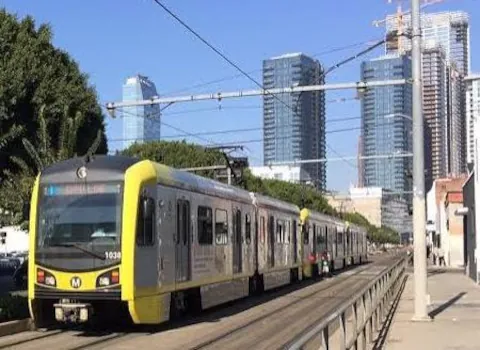
Los Angeles Metro Light Rail Line A
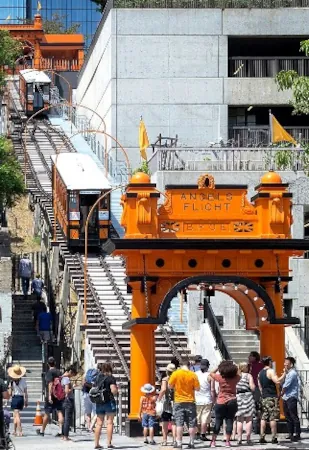
Angeles Flight Railway
After taking a ride on the Angeles Flight Railway we return to the LA Metro station and continue our journey to the Los Angeles Union Depot. We will go on a short walking tour of this huge depot. This depot sees close to 650 daily arrivals and departures which include Amtrak, Metrolink, and LA Metro Rail. We will have more time to explore Los Angeles Union Depot later in the tour.
Next we board a Metrolink train on the San Bernardino Line. The train ride to San Bernardino is 48 miles and will take 1 hour and 45 minutes . At San Bernardino we transfer to Metrolink's light rail Arrow service for the fast 17 minute ride to the end of the line in Redlands. Here we transfer to our van and travel to Perris for a visit to the Southern California Railway Museum which has over 200 exhibits.
the following 8 photos are a sample of what you will see at the California Southern Railroad Museum in Perris
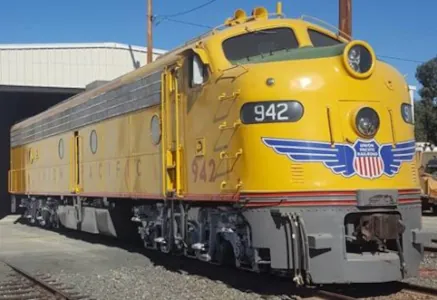
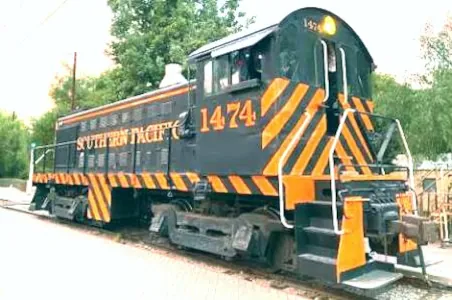
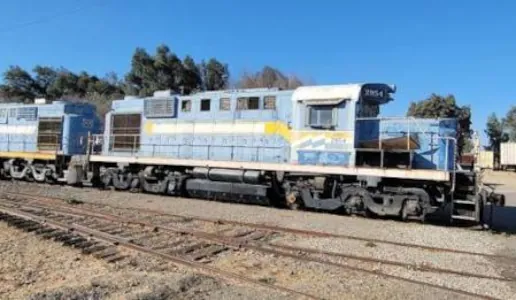
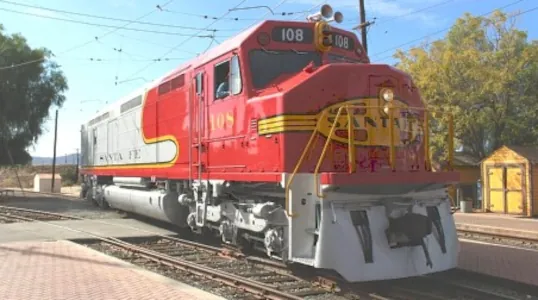
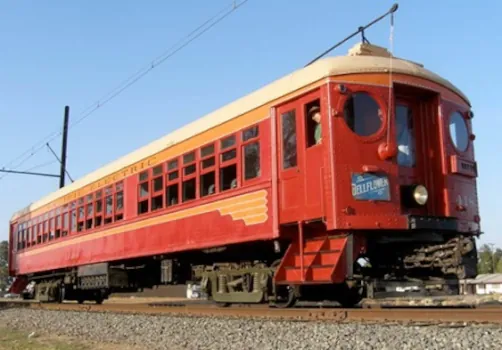
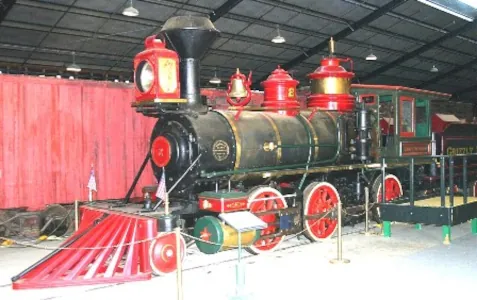
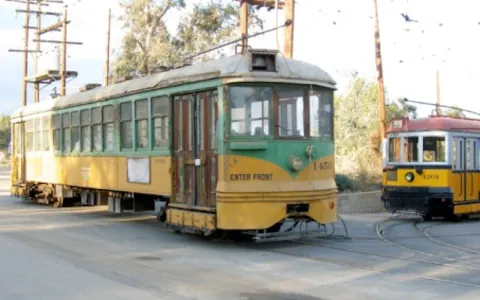
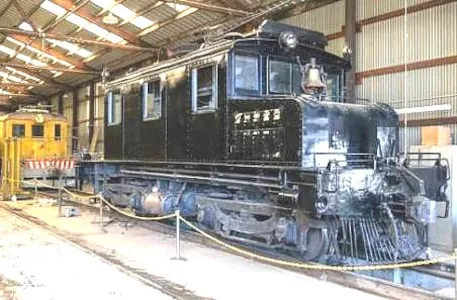
After our visit to the railway museum we ride in our van for the one hour trip to Oceanside which is located on the mainline of the former Santa Fe Los Angeles to San Diego line. hotel check-in upon our arrival at the 3 star Quality Inn & Suites Oceanside. In the evening we will have our “Welcome to California Dinner”.
Descriptions Of Today's Highlights
** Los Angeles Metro Light Rail Los Angeles Metro Rail provides rapid transit across Los Angeles County, operating four light rail lines and two underground subways for a total of 125 miles of track and has about 1,300 individual train trips everyday weekday.
** The narrow gauge historic Angeles Flight Railway originally went into operation in 1901 until 1969 when it was carefully dismantled and put into storage because of city redevelopment. Then in 1996 it was reassembled half a block from it's original site and put back into operation. It has two funicular cars that run in opposite directions on a shared cable. The tracks cover a distance of 298 feet with a vertical gain of 96 feet.
** Metrolink has a system of regional commuter trains and it serves six counties, Los Angeles, Orange, Riverside, San Bernardino, San Diego, and Ventura. It primarily operates to bring long-distance commuters into Downtown Los Angeles and major employment centers in Burbank, Glendale, and Irvine. They operate seven lines: Antelope Valley Line, Inland Empire-Orange County Line, Orange County Line, Riverside Line, San Bernardino Line, Ventura Line, and the Arrow Service between San Bernardino and Redlands.
** The Southern California Railway Museum in Perris, California, sits on 100 acres and is dedicated to preserving the region's rich rail history. It features the largest collection of Pacific Electric Railway "Red Cars" in the world, alongside restored steam locomotives, diesels, vintage trolleys, and expansive hands-on exhibits. Spanning over 200 exhibits, the grounds also host vintage Pullman sleeping cars, a 1927 railway post office car, and rare international trams. Two early Los Angeles 3 ft 6 in narrow gauge streetcars from the Los Angeles Railway or standard gauge streetcars from the Pacific Electric Railway run on the weekends on the one-half-mile long, dual gauge Loop Line. Passenger trains operate on the 1.5-mile long, standard gauge mainline that was once a part of the California Southern Railroad.
** The Grizzly Flats collection at the Southern California Railway Museum includes a variety of narrow-gauge rolling stock, such as two steam engines, three coaches, several freight cars and a caboose. The Grizzly Flats collection also includes other narrow-gauge rolling stock, such as Denver & Rio Grande Railroad gondolas and a flatcar, and a very rare car, the “Esmeralda,” which was a Carson & Colorado narrow-gauge, combination business car and caboose.
We have another early start to our day as we will catch Coaster train 670 departing Oceanside at 6:56am. We will get breakfast at a local restaurant that is open 24 hours and close to our hotel. The Coaster commuter train will arrive in San Diego at the former Santa Fe Depot still called by it's original name, at 7:57am. Here we will load up in our van and head east for the small town of Campo near the Mexican border. The drive will take approximately 75 minutes.
🍽 breakfast
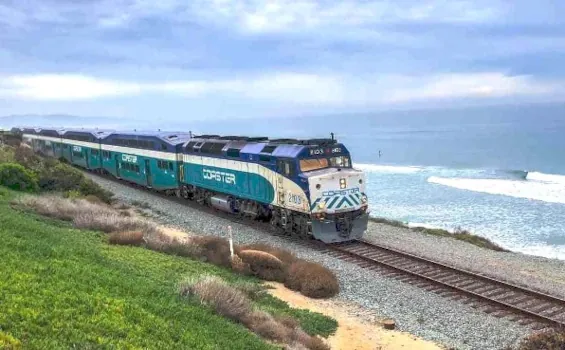
The North County Transit District's Coaster Commuter Train Running
Along The Beautiful Pacific Ocean South Of Oceanside
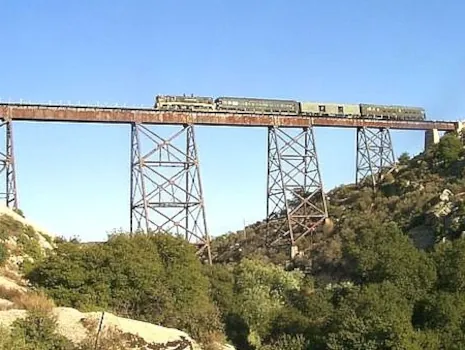
Campo is home to the Pacific Southwest Railway Museum also referred to as the Campo Railway Museum. While we are waiting to board the 10:30am excursion train called “Golden State” you can explore the steam, diesel, freight & passenger cars on display. The Golden State is a classic weekend only 45 minute excursion ride through the rugged back country of San Diego County on the historic San Diego & Arizona Eastern Railway passing mountain vistas and rural desert scenery until it reaches the International Border Tunnel near Division. Half of this tunnel is in the USA and half in Mexico. The train will not be entering the tunnel.
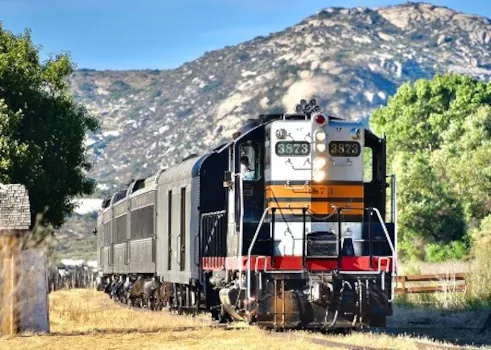
Museum Excursion Trains running on the old
San Diego & Arizona Eastern Railroad - next photo
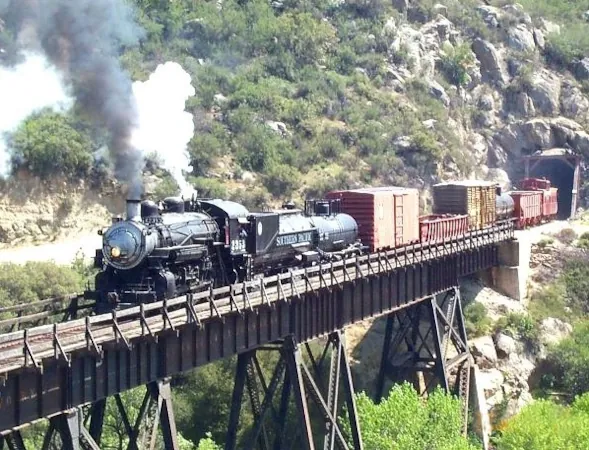
Southern Pacific Baldwin 4-6-0 2353 Is Pulling A Special Photo Freight
At The International Tunnel West Of Campo. Half The Tunnel Is In
Mexico And Half in the United States
Departing Campo we will pay a visit to the other railroad museum owned and operated by the Pacific Southwest Railway Museum. The 2nd location is in the town of La Mesa. The La Mesa Depot Museum has railroad related displays plus a 0-6-0 steam locomotive and caboose parked outside.
The San Diego Trolley Orange Line makes a stop right in front of the La Mesa Depot. After we have had the chance to inspect this museum we will board a trolley for the 45 minute ride to the City College Station which is near Balboa Park, home to the famous San Diego Zoo and more important to us the San Diego Model Railroad Museum. This is the largest model railroad in North America with 27,000 square feet of model trains.
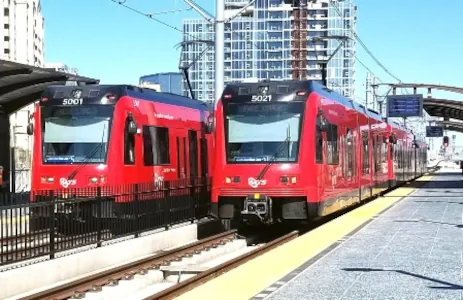
The San Diego Trolley
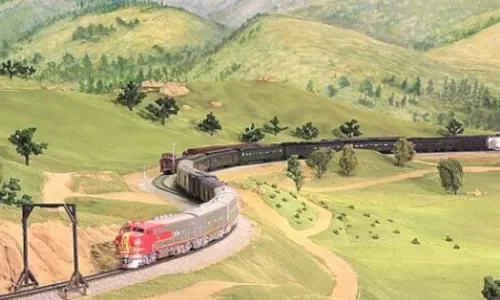
San Diego Model Railroad Museum
Next we return to the San Diego Trolleys City College Station but this time board one of the Blue Line trolleys for the 30 minute ride to San Ysidro which is on the Mexican border a few hundred feet from Tijuana. This line to the Mexican border has gained the nick-name the Tijuana Trolley. After a few minutes we will hop on a northbound trolley for the return to San Diego and the short transfer to our hotel for check-in at the 3 star The Dextro by Best Western in Little Italy within the San Diego city limits.
DESCRIPTIONS OF TODAY'S HIGHLIGHTS
** The Coaster is a premier, 41-mile commuter rail line operated by the North County Transit District in San Diego County. It provides daily scenic service between Oceanside and downtown San Diego, stopping at eight coastal stations along a breathtaking Pacific Ocean route. Trains take 61 minutes for the 41-mile journey with 30 daily round trips during the weekdays, 22 daily trips on Saturdays, and 18 daily trips on Sunday. Equipment is diesel-based and utilizes bi-level Bombardier passenger coaches and modern, Siemens Charger locomotives.
** The Pacific Southwest Railway Museum is located in Campo, California near the Mexican Border and on the old mainline of the San Diego and Arizona Eastern Railway line. This museum opened in 1986 with excursion trains departing from the restored 1916 Depot in Campo. The museum also has approximately 90 historic railroad cars and locomotives on display, including five steam locomotives, eighteen diesel locomotives and many other pieces of rolling stock.
** The La Mesa Depot is the oldest building in the city and the sole surviving station from the historic San Diego and Cuyamaca Railway. Operated by the Pacific Southwest Railway Museum, the original depot was built in 1894 and restored to its 1915 appearance. On display here is Mojave Northern Railroad #3 a 0-6-0 built by Davenport, a Pacific Fruit Express refrigerated car, and a Southern Pacific caboose.
** The San Diego Trolley is a light rail system serving San Diego County. The trolley's operator, San Diego Trolley, Inc. is a subsidiary of the San Diego Metropolitan Transit System. The trolley system serves 62 stations on 67.9 miles of track, using four primary lines Blue, Orange, Green, and Copper. The 5th line (Silver Line) is a downtown loop using heritage streetcars. The trolley began service on July 26, 1981, making it the oldest of the second-generation light rail systems in the United States, and the success of the system helped spark a nationwide revival of light rail.
** The San Diego Model Railroad Museum is a museum focuses on the heritage of railroading through model railroads. It was founded in 1982 and is 27,000 square feet which makes it the largest model railroad museum in North America. The museum is home to some of the largest HO and N scale layouts of their types. There are two massive HO scale layouts, a N scale layout, O scale layout, and a Lionel type 3-Rail O gauge layout plus a Toy Train gallery.
** The San Diego Trolley Blue Line connects Downtown San Diego to the San Ysidro Transit Center at the U.S.–Mexico border. The trip is a fast 40-minute ride popular with commuters, tourists heading to Tijuana, and shoppers visiting the nearby outlet malls.
This morning we have a nice leisure start to our day. After getting some breakfast at the hotel restaurant we will load up and head down to the Santa Fe Depot to photograph both Amtrak's Pacific Surfliner trains and the Coaster trains. First a Pacific Surliner train is due into San Diego at 9:04am with a Coaster train following close behind and arriving at 9:17am. Three minutes later a northbound Coaster train departs. We will then jump into our van and head north to photograph the northbound Coaster train on it's journey between San Diego and Oceanside with the Pacific Ocean in the background. Anyone that would rather ride this train can do so.
Shortly after arriving at the Oceanside station an Amtrak southbound Pacific Surliner will arrive at 10:08am. Then the northbound Coaster will arrive at 10:22am following a Sprinter train arriving from the Escondido line at 10:26am and a few minutes later another Sprinter train departs at 10:33am. A Sprinter train departs to be shortly followed by the arrival of the northbound Coaster train due at 10:42am. A few minutes later at 10:56am a Sprinter train departs the station at the same time a Sprinter train arrives into the station. Then one minute later northbound Pacific Surliner train arrive. If all trains are operating on-time in one hour we should see 8 passenger trains at Oceanside.
The Sprinter commuter trains are also operated by the same company that runs the Coaster trains. After the 8th train we will jump onboard the next Sprinter train which is due out at 11:03am for the 22 mile run to Escondido. After getting some pictures of our train at the Escondido we grab some lunch in town then head north towards Cajon Pass. We will be in Cajon Pass within 90 minutes of departing Escondido. This pass is located right between the San Gabriel Mountains and the San Bernardino Mountains.
Between the two rail lines which are the Union Pacific and BNSF Cajon Pass sees approximately 90 trains a day. We will be kept very busy all the way until the sun goes down photographing trains at this famous location. We are going to spend the night in Cajon Pass in the small village of Cajon Pass at the 3 star Best Western Cajon Pass Inn. You can see the trains from this hotel.
🍽 lunch
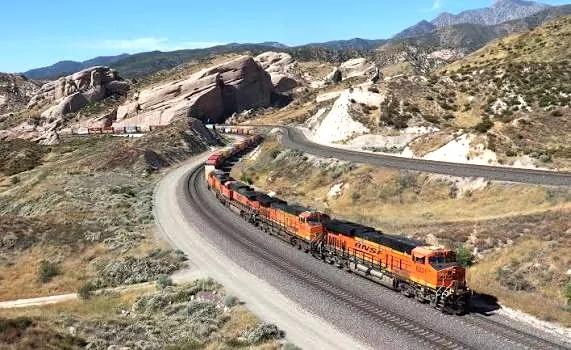
A BNSF Eastbound Freight Rounds Sullivan's Curve In Cajon Pass
DESCRIPTIONS OF TODAY'S HIGHLIGHTS
** The Amtrak Pacific Surliner is a scenic 351-mile passenger rail route stretching between San Diego and San Luis Obispo, California, serving 29 stops including Los Angeles and Santa Barbara. It is one of Amtrak's busiest routes, famously hugging the Southern California coastline.
** The Sprinter is a hybrid rail service in San Diego County. It runs between the cities of Escondido and Oceanside primarily using the 22-mile Escondido Subdivision. The service is owned and operated by North County Transit – San Diego Railroad. The line has fifteen stations. Sprinter is the first passenger train service along the Escondido Branch since the Atchison, Topeka and Santa Fe Railway discontinued passenger service in 1946. Originally built in 1888, the entire line had to be rebuilt to accommodate more traffic and be elevated because the line runs along a river.
** The Cajon Pass is a rugged, 3,777-foot mountain corridor in Southern California that hosts one of the busiest mountain railroad crossings in the United States. Roughly 90 trains a day pass through along steep 3% grades, funneling crucial freight between West Coast ports and the rest of the country. The pass is traversed by two major railroad companies: BNSF Railway owns three mainline tracks through the pass. The original route was built in the 1880s by the Santa Fe Railway, with later additions including a gentler 2.2% grade track built in 1913 and a third track in 2008. Union Pacific operates a single-tracked mainline with sidings This route, known as the Palmdale Cutoff, was opened in 1967 by the Southern Pacific Railroad before merging with Union Pacific.
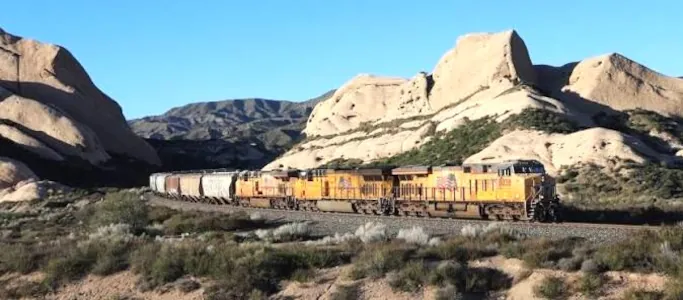
Union Pacific Westbound Freight in Cajon Pass
After breakfast at a local restaurant near our hotel with a view of the passing trains we spend the morning hours in Cajon Pass trackside including famous Summit. Just west of Summit is the well known railfan viewing area called “Hill 582” which is maintained by railfans and has a great view of all tracks in Cajon Pass. We will pay this scenic location a visit before departing the pass and making our way east Horsethief Canyon and the double track mainline. Next we pass through the town of Hesperia and then a few miles east is the famous Natural Crossover where westbound trains cross over eastbound trains. Finally we reach the city of Victorville.
🍽 lunch
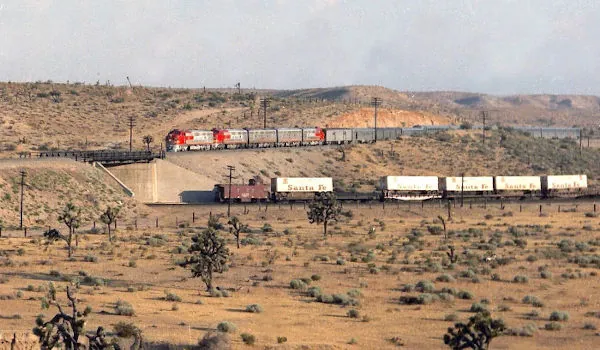
Back in 1967 Two Santa Fe Trains meet at the famous Natural
Crossover where westbound trains cross over eastbound trains.
Here we catch Santa Fe train No. 17 The westbound Super Chief/El
Capitan on the upper level and a eastbound Santa Fe freight
on the lower level
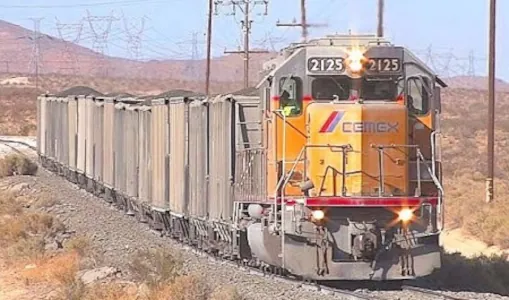
Before departing Victorville we will pick up some sandwiches and chips at a mini-market then head out onto the mainline of the Mojave Northern Railroad which connects with the BNSF and Union Pacific Railroads at Leon which is 2 miles east of Victorville. The Mojave Northern is a private cement railroad that runs17 miles into the Mojave Desert to the Reserve Quarry. As a general rule a loaded train departs from the Quarry at approximately 11:00am. Upon arrival in leon the crew of this train will drop it's loads and pick up a string of empty hoppers and head back to the quarry one hour later. We will follow the empty train all the way to the Quarry. While waiting for the empty train to depart the cement plant we will go a few miles north of Leon and have our picnic lunch next to the tracks.
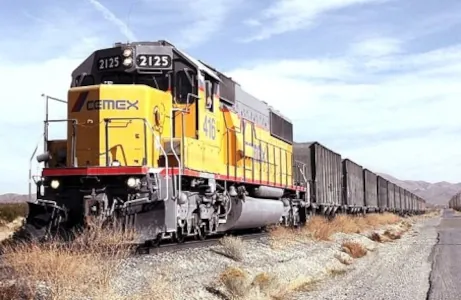
A loaded Train of Limestone is Southbound from the
Quarry to the Cement Plant at Leon, California on
the Mojave Northern Railroad - next photo
After the train arrives at the quarry we will depart for Trona which is just south of Death Valley National Park. Here we will pay a visit to the Trona Railroad. The drive to Trona will take about 3 hours. The plan is to be at Trona when the loaded train of potash departs at approximately 4:00pm. We will follow this train 30 miles to Searles where it connects with the Union Pacific. The climb out of the Trona Valley for a loaded train is a challenge on the 1.9% grade and it is not uncommon to have up to six diesels moving this train. Once the train reaches Searles we will head for the town of Mojave following Union Pacific's Lone Pine Subdivision and watching for the local coming out of Mojave to connect wit hthe Trona train. The photography out here in the vast desert on both the Trona and Union Pacific Railroads is spectacular. As sunset approaches we will head on into Mojave for hotel check-in at the 3 star Best Western Desert Winds. The mainline of the Union Pacific and BNSF is just across the street from the hotel. After check-in you can walk across the street and watch trains if you like.
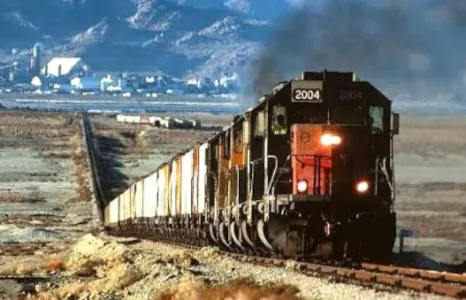
A Westbound Loaded Train On The Trona Railway Pulls
Out of The Searles Valley on a steep 1.9% grade
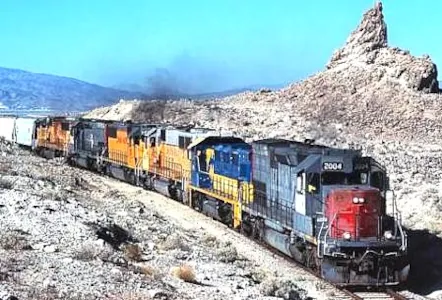
This Westbound train runs Past The Pinnacles On
It's Way To The Connection With The
Union Pacific Railroad At Searles
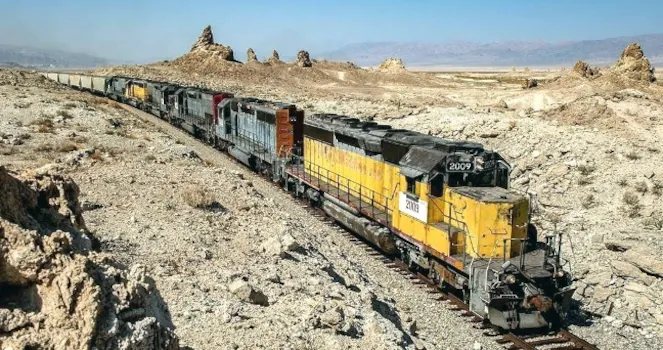
Another Westbound Loaded Train On The Trona Railway Runs Past The Pinnacles
DESCRIPTIONS OF TODAY'S HIGHLIGHTS
** Sullivan’s Curve is a highly scenic and iconic section of the railroad in Cajon Pass renowned among railfans and photographers for its dramatic S-curve alignment and backdrop of unique sandstone rock formations. It's got it's name from a 1940's Santa Fe railway photographer, Herb Sullivan who enjoyed photographing steam locomotive pulled trains on this curve. Sullivan's Curve is only 3 miles from our hotel.
** The famous railfan viewing hill in Cajon Pass is known as “Hill 582”. Named after a former railroad signal mast and it has been a well-known spot for decades. Maintained for years by railfan volunteers with benches and memorials, the overlook offers a commanding view of both BNSF and Union Pacific tracks.
** The Cajon Pass railroad summit located at an elevation of 3,777 feet in the rugged San Gabriel and San Bernardino Mountains is one of the busiest railway mountain crossings in North America and is the top of the Cajon Pass grade. Over 90 trains pass through Cajon Pass each day.
** Just east of Hesperia lies the "Natural Crossover", a famous, elevated railroad flyover on the BNSF & UP Railroads. It safely switches trains from the left track to the right track over a steep grade. The Santa Fe Railway operated on a "left-hand running" system. As trains climbed Cajon Pass from the east, they used the northern main track, which put them on the left side of the right-of-way. The Natural Crossover was built so trains could cross over one another without interfering with traffic, returning trains to the conventional right-hand track. This allowed locomotive engineers in older steam and early diesel trains to have a much better view of trackside signals.
** The Mojave Northern Railroad is a private carrier owned by Cemex USA, an American subsidiary of the Mexican multinational supplier of concrete and building materials. The railroad hauls limestone to the company’s cement plant near Victorville, California from the company’s quarries northeast of there. The railroad was built in 1915-16, by the Southwestern Portland Cement Company. It has a connection with the BNSF and Union Pacific Railroads at Leon. The line was initially a common carrier, but changed its status to that of a private carrier in 1925. For many years, the railroad operated saddle-tank steam engines pulling trains of side-dump cars. In the diesel era, the railroad operated three of the unusual Fairbanks-Morse FM H-20-44 model opposed-piston locomotives. Now it's operates conventional diesel engines pulling open-top hopper cars. The last passenger excursion which was pulled by steam locomotive No. 3, a 0-6-0T Davenport built in 1919 was in May 1957. Trains depart Leon about 8am and 12 noon and return about 11am and 3:00pm.
** The Trona Railway is a 30.5 mi short-line owned by Searles Valley Minerals. The TRC interchanges with the Lone Pine Subdivision of the Union Pacific Railroad (former Southern Pacific Transportation Company) at Searles, California. The railroad was built by the American Trona Company in 1914, to bring the mining company's potash to an interchange with the Southern Pacific Railroad. This railway has a steep1.9% grade coming out of the Searles Valley. The railway took delivery of two Baldwin DT 6-6 2000 diesels in April 1949. During the early years they also had a Baldwin AS616 diesel.
After breakfast at our hotel we will first check to see if there are any trains or engines parked at the Mojave depot. The mainline of the Union Pacific and BNSF merge in Mojave. Also the Lone Pine branch which interchanges with the Trona Railway joins the mainline in Mojave. It will not be too long before a train comes by since this line sees up to 50 trains per day. Once we see a westbound train then we can follow it all the way to the town of Tehachapi. We will be able to catch the train for photos at at least 5 locations before the town of Tehachapi. From here we will jump ahead and position ourselves overlooking the famous Tehachapi Loop. Then we can continue following this same northbound train all the way to the 180 degree Caliente Loop. We will then spend the rest of the day trackside at different locations on Tehachapi Pass and the Loop waiting for more trains to pass. Between trains we can have our picnic lunch at a scenic location trackside.
Hotel check-in at the 3 star Sure Stay Hotel in Tehachapi. The mainline is just one block away if you want to go watch more trains after check-in.
🍽 breakfast, lunch
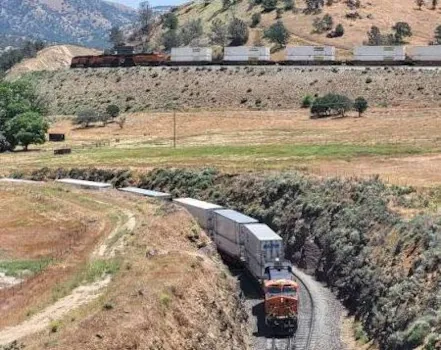
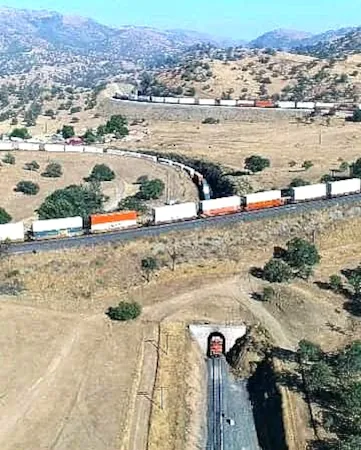
Two Eastbound Trains Loop Over itself and
then climbs the hill above Tehachapi Loop.
You can see the train in the left photo in
three different locations. This is a marvel
of rail engineering - next photo
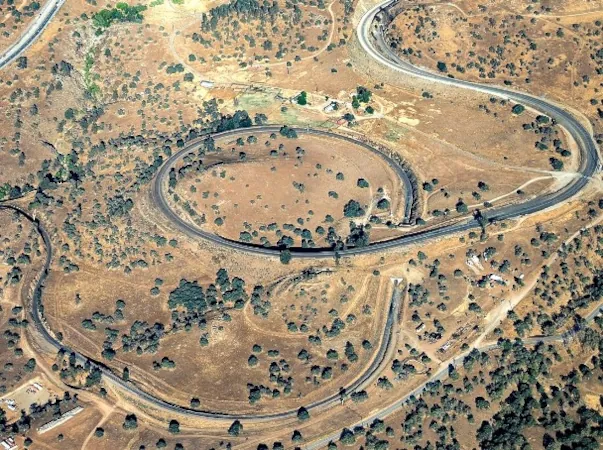
A spectacular view of the Tehachapi Loop used
by the BNSF and UP Railroads
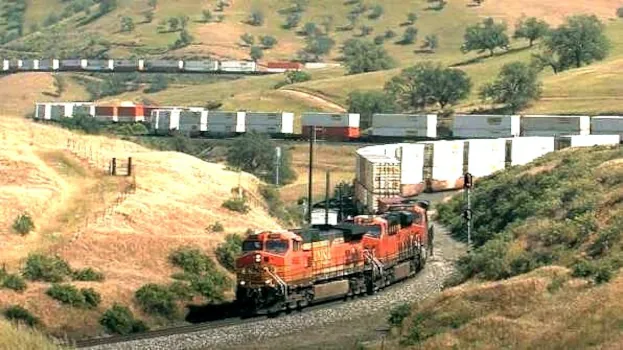
A BNSF Eastbound tackles Tehachapi as it twists and turns
on the steep grade
DESCRIPTIONS OF TODAY'S HIGHLIGHTS
** The Tehachapi Pass and Loop is a legendary 28-mile stretch of mountain railroad renowned for its steep grades and engineering marvels. Connecting the San Joaquin Valley to the Mojave Desert, it acts as a vital freight corridor with an average of 36 to 50 trains passing through daily. The line tackles a staggering elevation gain of over 3,100 feet from the valley floor to the town of Tehachapi. Trains battle an average gradient of 2.2%, with some treacherous sections reaching near 3%. The challenging terrain is tamed by a series of 10 tunnels and 18 bridges along the route. The crown jewel of the pass is a massive 3,799-foot spiral built by Chinese laborers in 1876. The track loops over itself in a 1,210-foot diameter circle, gaining 77 feet of elevation. Any train longer than 3,800 feet will cross directly over itself going around the loop. The line is heavily utilized by Union Pacific and BNSF Railroads.
After breakfast at our hotel we will spend the morning hours at the Tehachapi Loop. Mid morning we will start making our way east back to Mojave and continue on to the town of Lancaster. Somewhere along the mainline we will stop and have our picnic lunch.
Lancaster is the terminus of the Antelope Valley Line for Metrolink. Metrolink has a commuter train scheduled to depart at 12:11pm headed for Los Angeles. You will have the option to ride this train if you like or follow it trackside with our van for photos. We will follow this train to Santa Clarita which is a distance of 40 miles running through the . If you decide to ride this train then you will need to get off at this station.
The Metrolink Antelope Valley Line runs through the San Gabriel Mountains and the Sierra Pelona Mountains. The line crosses over Soledad Pass at an elevation if 3,209 feet before dropping down into the Soledad Canyon which was carved by the Santa Clara River. Then closer to Los Angeles, the line also passes through the Newhall Pass, which divides the San Gabriel Mountains from the Santa Susana Mountains.
🍽 breakfast, lunch
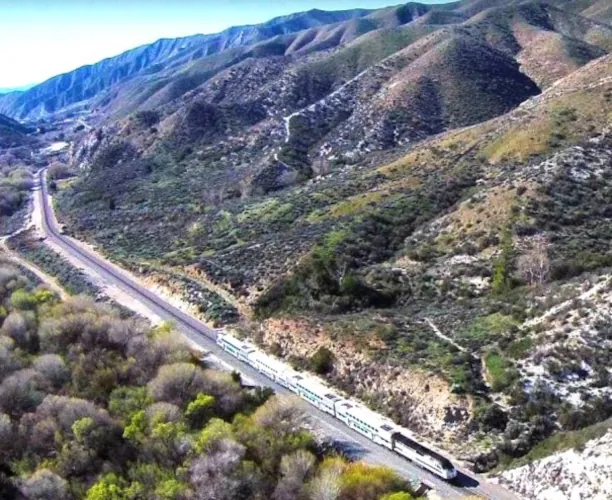
A Metrolink Commuter Train Runs Through Spectacular Soledad Canyon
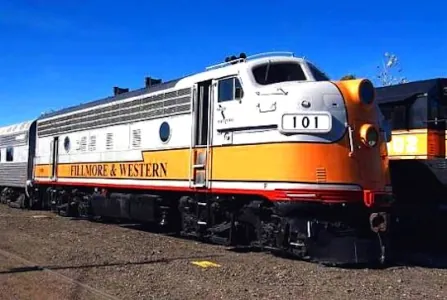
From Santa Clarita we travel west to the small town of Fillmore. Here we will pay a visit to the Fillmore Historical Museum which is housed in the old Southern Pacific Depot. There are some interesting railroad displays here including a diesel engine on the turntable from the Fillmore & Western Railroad. Additionally there are several pieces of rolling stock and even some stored diesels in the yard which are from the now closed Fillmore and Western Railroad. This railroad ran it's last excursion on June 26, 2021. It is reported that two F7's , a GP 35 and a rare Alco RS-32 are still at Fillmore. We will check that out.
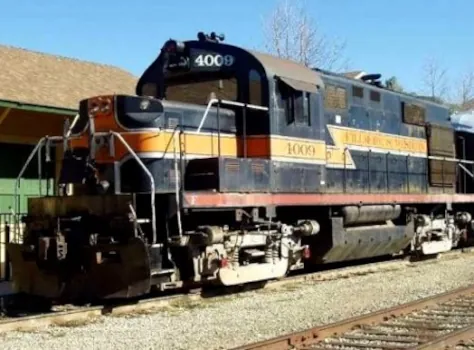
Fillmore and Western has stored some diesels in the
Fillmore yards including a rare Alco RS 32 and a
couple of EMD F7A's - next photo
Departing Fillmore we continue west to the town of Oxnard which is the main terminal of the small Ventura County Railroad. The current diesel roster consist of a three EMD units which are a GP15, GP 7 and GP 38-2. We will try and photograph these engines.
Finally we will spend the late afternoon trackside on the Coast Route which runs through Oxnard. Metrolink operates several commuter trains on this line. The first one in the afternoon is due at 3:32pm. The next train we will try and catch it in the Santa Susana Mountains. This train is due in the mountains at 5:25pm. Then a short drive will put us at the train station in Chatsworth just in time to catch the last commuter train of the evening due at 6:19pm.
From here we head for North Hollywood and the Los Angeles Metro Station. For those that are interested you can jump on a LA Metro subway train Line B for the 40 minute ride to Los Angeles Union Station. Your guide and van will meet you at Union Station and transfer to our near-by hotel in China Town which is only a short distance from the depot. After hotel check-in at the 3 star Aiden Los Angeles Downtown Dragon Gate Inn we can get some dinner at one of the popular Chinese restaurants. This hotel is walking distance from Union Station and after dinner you can always take a stroll over to Union Station and see what is going on.
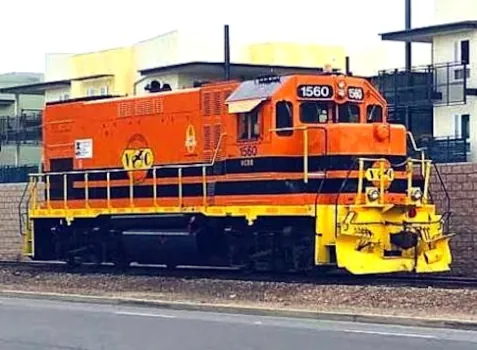
Ventura County Railroad GP-15
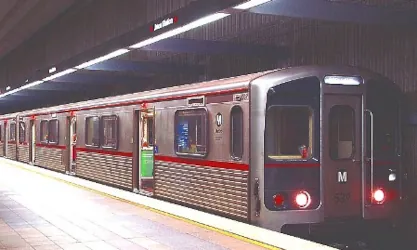
Los Angeles Metro Line B
DESCRIPTIONS OF TODAY'S HIGHLIGHTS
** The former Southern Pacific San Joaquin Route now owned and operated by Metrolink is called the Antelope Valley Line which runs through the San Gabriel Mountains and the Sierra Pelona Mountains. The line crosses over Soledad Pass at an elevation if 3,209 feet before dropping down into the Soledad Canyon which was carved by the Santa Clara River. Then closer to Los Angeles, the line also passes through Newhall Pass, which divides the San Gabriel Mountains from the Santa Susana Mountains and finally enters the San Fernando Tunnel which was completed in July 1876 and is 6,940 feet long. This line is now a vital transit link for commuters living in the greater Lancaster and Palmdale and working in the greater Los Angeles area.
** The Fillmore Historical Museum stands as a captivating testament to the rich history and cultural heritage of Fillmore, California. Nestled conveniently on Main Street, this quaint museum is adorned with an array of historical artifacts that transport visitors back to the vibrant eras of the 1920s and 1950s. The centerpiece of the museum grounds is the former Southern Pacific Railroad Depot built in 1887. Originally vital to the growth of the town, it now displays railroad memorabilia, a massive antique music box, and historical town archives.
** On display and stored in the Fillmore railroad yards are a number of former Fillmore & Western Railroad diesels and rolling stock. Several diesel engines are stored in the yards including a GP 35, a couple of F7's, and a rare Alco RS-32. The Fillmore & Western Railroad ended passenger excursions in June 2021. The tracks are owned by the Ventura County Transportation Commission and there was a dispute regarding the high cost of maintaining the tracks. Finally an agreement was made that the railroad could continue to run trains until June 2021. After that date all operations would end. Meanwhile the Sierra & Northern Railway had plans to take over the operations and continue running passenger trains but there was a big dispute between the City of Fillmore and new railroad management and so all plans fell through.
** The Ventura County Railroad, now owned and operated by the Genesee & Wyoming currently extends for just over twelve miles on four branches and plays a significant role in the transport of freight and goods serving the industrial areas of south Oxnard, the Port of Hueneme, and Naval Base. It connects with the Union Pacific Railroad in Oxnard.
** The Metrolink Ventura County Line is a regional commuter rail route in Southern California that connects Ventura County with downtown Los Angeles. The line operates between the East Ventura station and Los Angeles Union Station. The full 87-mile trip takes about 1 hour and 45 minutes end-to-end.
** The LA Metro B Line is a 14.7-mile, fully underground rapid transit subway that runs between Union Station in Downtown LA and North Hollywood in the San Fernando Valley. The line features 14 stations.
After breakfast at the hotel restaurant we transfer the short distance to Los Angeles Union Station where the group will board Amtrak's Coast Starlight for the 161 mile journey north to San Luis Obispo. The train departs at 9:51am and arrives at 3:05pm. Many miles are traveled running along the Pacific Ocean and the scenery is spectacular. This train has a full service dining car for lunch.
Upon arrival in San Luis Obispo we will visit the San Luis Obispo Railroad Museum which is located in the Southern Pacific Freighthouse built in 1894. There are many historic displays promoting railroading in central California. After our museum visit we transfer to our hotel. Check-in at the 3 star Sands Inn & Suites. Today kicks off the annual Central Coast Railroad Festival of which we will take part in the fun.
🍽 dinner
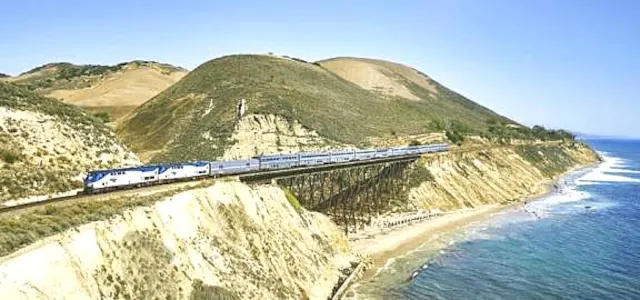
Amtrak's Northbound Coast Starlight running along the Pacific Ocean
DESCRIPTIONS OF TODAY'S HIGHLIGHTS
** The Amtrak Coast Daylight was originally an iconic, vibrant red-and-orange Southern Pacific streamliner called "The Most Beautiful Train in the World" running between Los Angeles and San Francisco which was launched in 1937. Shortly after Amtrak took over this train in 1971 it expanded the route and renamed the train the Coast Starlight in 1974. Now the train operates Los Angeles to Seattle, Washington.
The San Luis Obispo Railroad Museum is housed in the Southern Pacific Freighthouse built in 1894. It is the oldest surviving railroad building in San Luis Obispo County. The SP Freighthouse was originally built along with the original San Luis Obispo Railroad Depot in 1894 upon arrival of the Southern Pacific Railroad to San Luis Obispo. The mission of the San Luis Obispo Railroad Museum is to educate the public about the history of railroading on the central coast including the Southern Pacific Railroad, Pacific Coast Railway, Santa Maria Valley Railroad, Amtrak, and the Union Pacific Railroad. The museum includes a wide range of exhibits and artifacts including SP freight cars, a passenger rail car, a caboose, and a 1941 locomotive.
After breakfast we travel to the near-by town of Arroyo Grande. This is the home to the two foot gauge Norgrove Railroad that is located on the Norgrove Garden Vineyards and Orchards. This railroad is not open to the public and visiting is by invitation only. On our visit today they will have two steam locomotives in operation on this 3 mile railroad. The star attraction is the former US Army No. 5240, a 2-6-2T built by Davenport in 1918 and was to operate during World War I on the Trench Railways in Europe but never left the USA because of the Armistice and the end of the war. The 2nd steam locomotive that will be in operation for our visit is No. 6 “Buckeye” an 0-4-0T built by Orenstein & Koppel of Berlin, Germany in 1935. This locomotive worked a mine in the African country of Rhodesia before pulling tourist trains for children in Zimbabwe before coming to Arroyo Grande. Additional steam and diesel power will be on display for our group at the workshop. We will spend the morning hours running the train around the 3 mile loop staging several scenic photo run-bys. On the first run we will use No. 5240 a 2-6-2T. Then on the next run we will have a different train consist pulled by No. 6 an 0-4-0T 0-6-0T . Plenty of photo run-bys will be made with both trains. We have a surprise for our lunch. The Norgrove Railroad has just completed their new narrow gauge dining car. We will have lunch onboard their dining car as as one of the steam locomotives will pull us around the loop going in the other direction which will include some new photo run-bys.
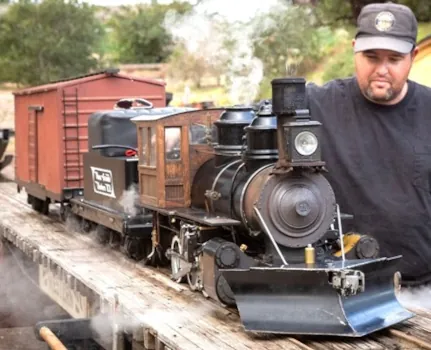
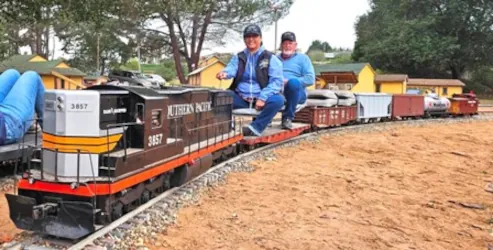
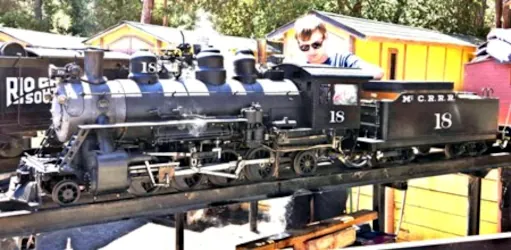
Early afternoon we visit the Bittercreek Western live steam railroad also in Arroyo Grande and only a few minutes from the Norgrove Railway. This is a private event and our group is by invitation only. This 7.5 inch gauge railroad has 1.2 miles of mainline on a scenic 7-acre parcel.
🍽 breakfast, lunch
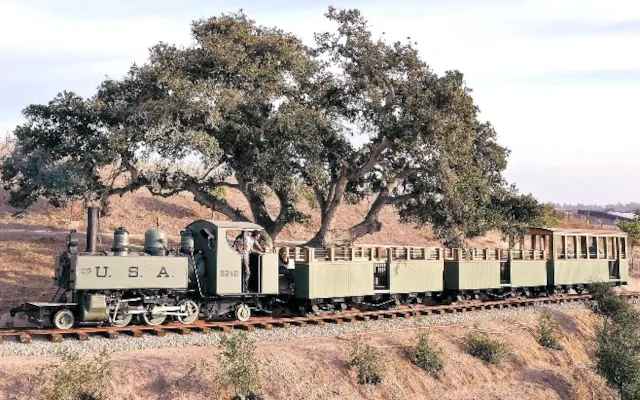
Norgrove Railway No. 5420 a 2-6-2T built by Davenport in 1918 performing
a photo run-by
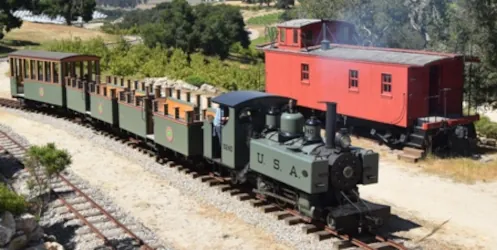
No. 5420 making another photo run-by next to a rare
original Central Pacific Caboose
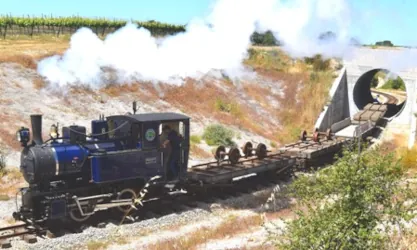
No. 6 pulling a work train around
the unique loop
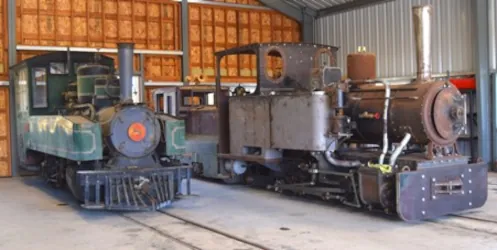
The Norgrove Railway Workshop is No. 5420 & No. 6
all fired-up and ready to go
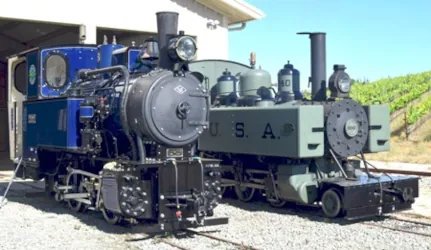
On the ready track just outside of the workshop
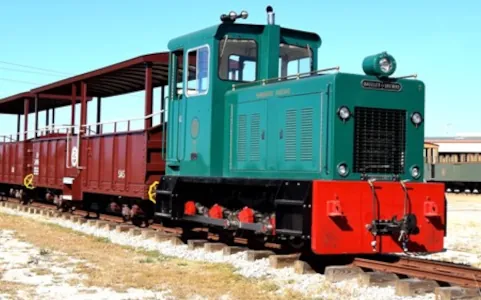
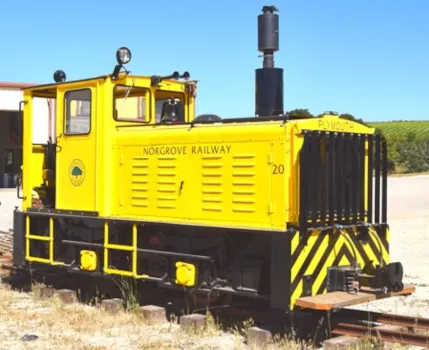
In the rail yard of the Norgrove Railway are their
two diesels - next photo
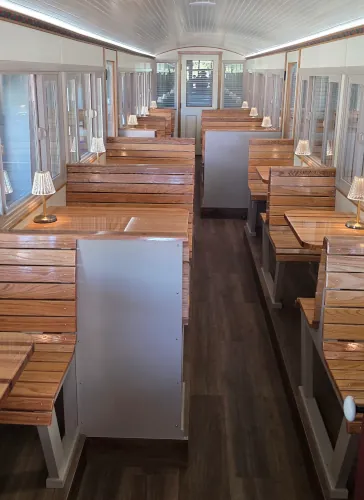
We will enjoy our lunch onboard the new
narrow gauge dining car
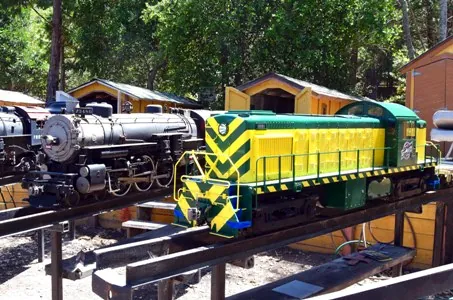
SOME OF THE MOTIVE POWER ON THE BITTERCREEK WESTERN 7.5 INCH RAILROAD
Photos by Mike Massee
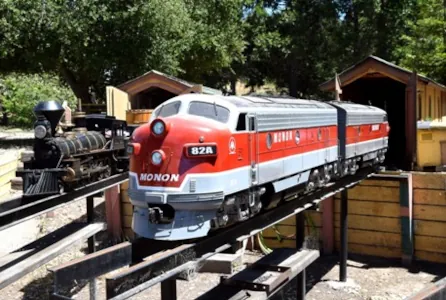
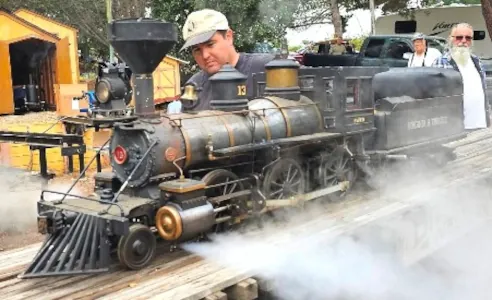
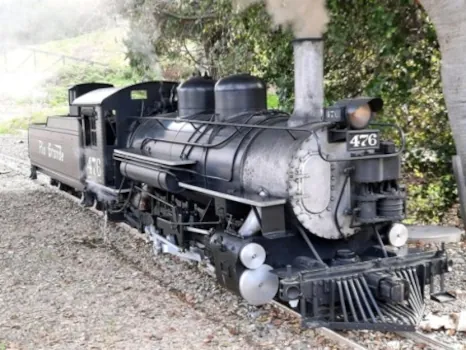
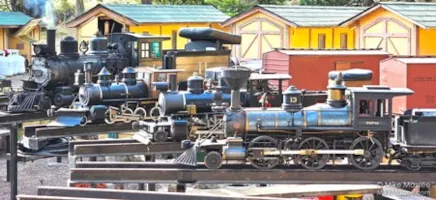
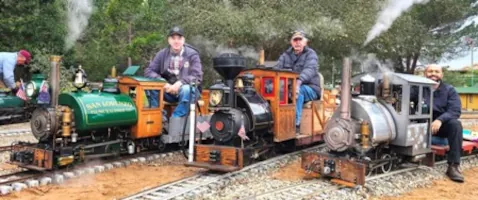
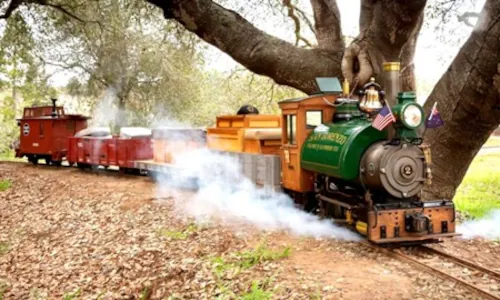
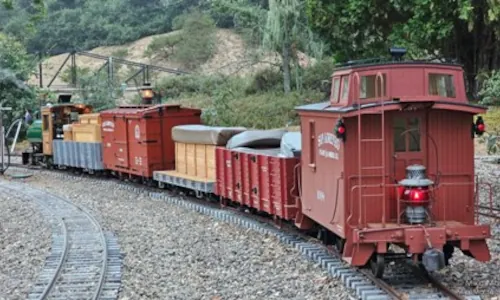
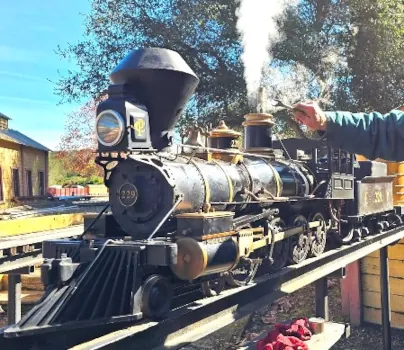
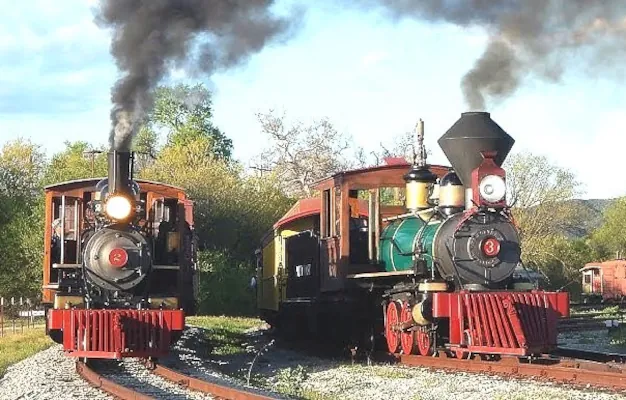
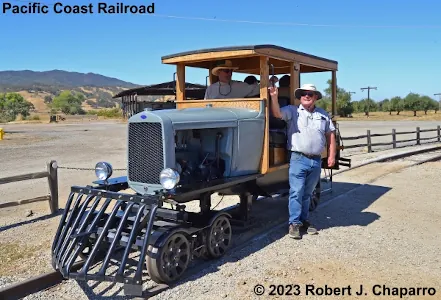
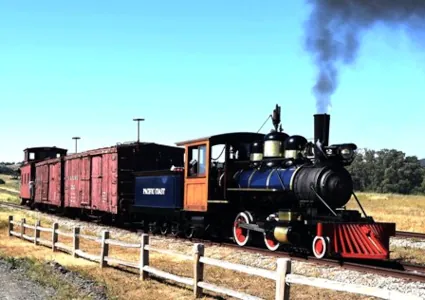
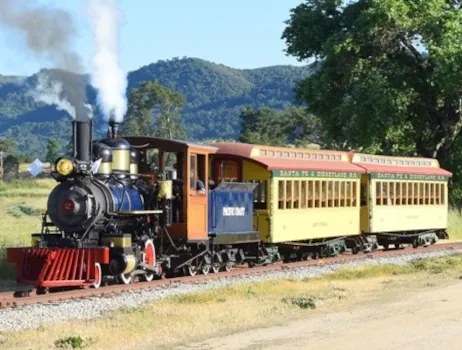
In the afternoon we will visit the 3 foot gauge Pacific Coast Railroad located on the 14,000 acre Santa Margarita Ranch in Santa Margarita. Our visit is a private event by invitation only. This 3 foot gauge railroad makes a 3.2 mile loop around the ranch. The railroad has three steam locomotives, one diesel and one Ford Model A railcar. Their three steam locomotives include a 4-4-0, 2-8-0 and 2-6-2. One of the steam locomotives will be pulling our charter train and we have requested two different train consist for photos during our visit. We then return to our hotel in San Luis Obispo for a 2nd nights lodging at the Sands Inn & Suites.
the following photos ARE OF THE THREE FOOT GAUGE PACIFIC COAST
RAILROAD LOCATED ON THE SANTA MARGARITA RANCH IN SANTA MARGARITA.
HIS RAILROAD IS A NARROW GAUGE LOVERS PARADISE
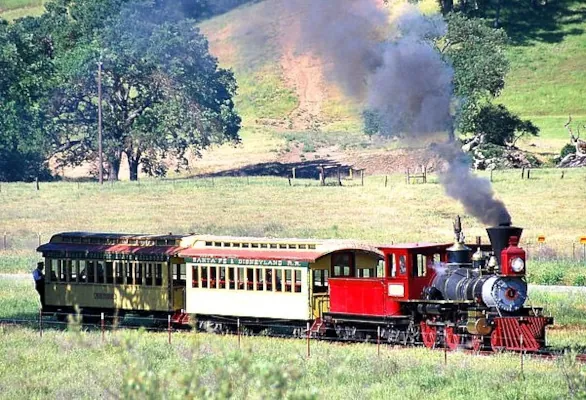
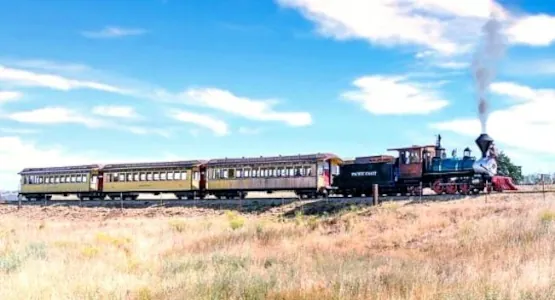
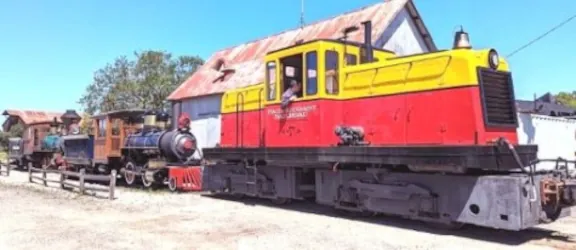
The Pacific Coast Railroad even has a diesel and a classic
Ford Model A Railcar - next photo
We will have both freight and passenger train
consists with plenty of photo run-bys - next photo
DESCRIPTIONS OF TODAY'S HIGHLIGHTS
** The Norgrove Railway is a private, 2-foot gauge heritage railroad located in Arroyo Grande. It is set on a 120-acre property featuring vineyards, orchards, and ancient oak trees, and operates restored historical steam locomotives and railway equipment. The railway boasts a collection of rare, historical narrow-gauge steam locomotives. Highlights include the “Buckeye,” a wood- and coal-burning 0-4-0 engine built in Berlin in 1935, and a WWI-era Davenport 2-6-2 trench locomotive. The line features 3 miles of challenging, custom-built narrow-gauge track winding through working vineyards and orchards including a mini-Tehachapi Loop. The property includes a highly equipped workshop where skilled staff carry out heavy restorations on historical trains, including heritage projects for other famous railroads across the country.
** The Bittercreek Western Live Steam Railroad on 7.5 inch gauge includes 1.2 miles of mainline with many sidings and two rail yards. The facilities include fourteen steaming bays, hydraulic lift, and turntable. A 14x80 foot car barn, 3 bridges, 3 trestles, and 3 tunnels can be found along the way. Most mainline switches are motorized with spring points. There are six water sources, for steam locomotives, amongst the trees, shrubs and flowers. This railroad is not a club or other formal organization. It is owned and operated by Karl Hovanitz for the benefit of all his friends that like to play trains. It's a place where friends can meet and share a common joy and passion - railroading!
** The Pacific Coast Railroad is a 3 foot narrow gauge railroad located at the Santa Margarita Ranch in Santa Margarita, California. Established in 2000 and completed in 2004 the railroad sees only very limited public operation. Most operations are private groups and charters. The railroad has a 3.2 mile loop around the most historic part of the ranch. The railroad currently operates three steam locomotives built between 1897 and 1968, and four of the original Santa Fe & Disneyland Railroad passenger cars. Other equipment includes an ex-International Railways of Central America caboose, business car Cuscatlan, a ford model A railspeeder, and several ex-Denver & Rio Grande freight cars.
During the morning and early afternoon we will visit several G scale Garden Railroads that will be open for the Central Coast Railroad Festival. Then mid day we will have lunch at the unique Rock & Roll Diner in Oceano. This diner features a surreal 50's theme and is built upon two train cars, creating the ultimate diner feel. With an ambiance filled with pictures and antique memorabilia, you are sure to be fascinated. The rear end observation car operated on the Seaboard Air Line Railroad and was part of the "Silver Fleet" of streamliners bringing up the rear end of the The Silver Meteor, Silver Star, and Silver Comet.
🍽 breakfast, lunch
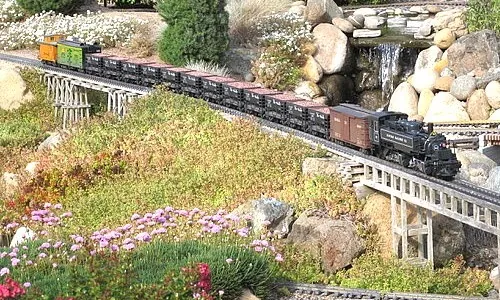
We visit some of the G Scale Garden Model railroads
during the Central Coast Railroad Festival
After lunch we return to near-by San Luis Obispo and resume our northbound journey on Amtrak's Coast Starlight which departs at 3:05pm and arrives in San Jose at 7:58pm. This train has a full service dining car and you can get dinner onboard if you like. Upon arrival in San Jose transfer to the 3 star Best Western Plus Airport Plaza Hotel in San Jose and check-in.
We return to the San Jose train station and board Amtrak train 528, a Capitol Corridor train departing at 8:38am and arriving at the Suisun-Fairfield station at 11:10am. This train will take you up to Oakland, then Emeryville and on to Richmond, Martinez and finally Suisun-Fairfield.
At Suisun-Fairfield we make the short transfer by highway to The Western Railway Museum which is a 22-acre living history museum preserving California's electric railway heritage. The museum features an 11-mile, round-trip interurban train ride over the mainline of the historic Sacramento Northern Railway. The museum is closed on Monday's so we will be the only people there. Our visit is private and our interurban ride is a charter just for our group.
🍽 breakfast, lunch, dinner
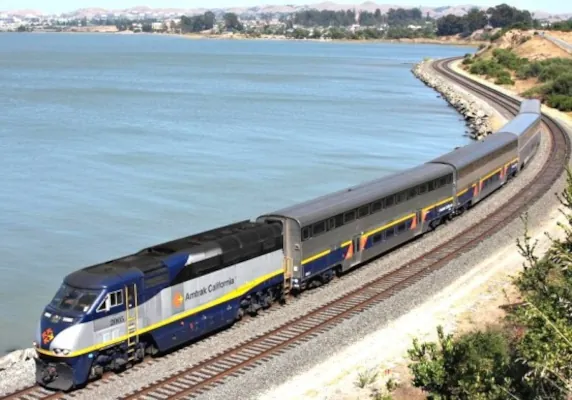
Amtrak's Capitol Corridor trains running along the San Francisco Bay
the following photos ARE AT THE WESTERN RAILWAY MUSEUM
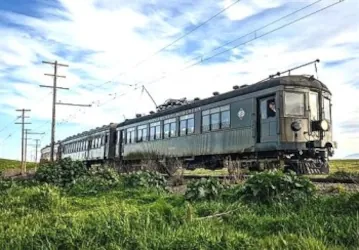
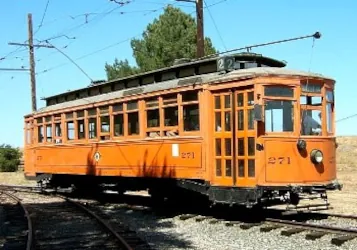
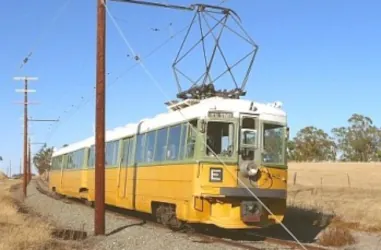
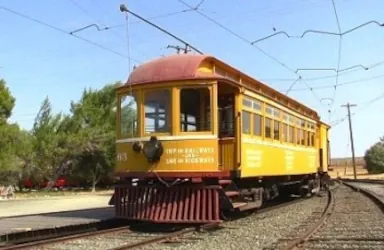
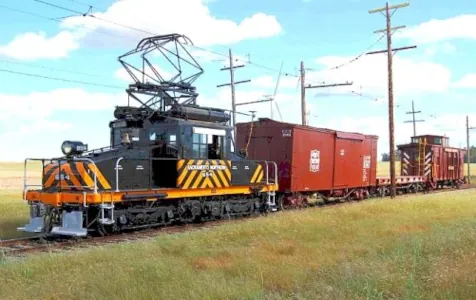
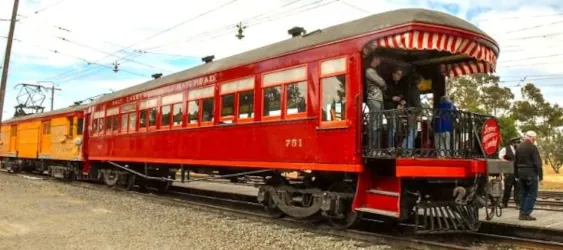
The highlight of our museum visit will be an 11 mile roundtrip
private charter onboard luxury open observation car no. 751
pulled by a electric motor including photo run-bys
After our visit to this railroad museum we next visit the California Northern Railroad diesel workshops located in American Canyon. The California Northern Railroad is a Class III short-line railway that operates over 250 miles of leased Union Pacific trackage in Northern and Central California.
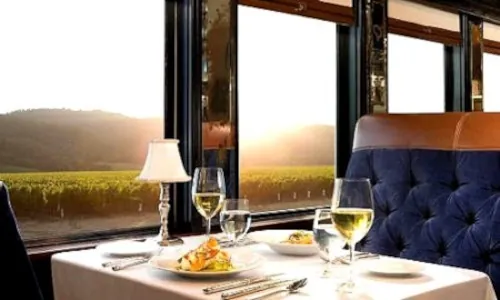
Finally we top off the day onboard the famous Napa Valley Wine Train dinner excursion. Prior to boarding the train we will make a stop at the railroad's workshops to take a look at some of their motive power. The Napa Valley Wine Train is a luxurious, vintage rail excursion traveling 36 miles round-trip from Downtown Napa to St. Helena. Housed in exquisitely restored 1915-era Pullman cars, it offers multi-course gourmet meals, wine tastings, and panoramic vineyard views. The train departs at 6:20pm and returns at returns at 9:00pm.
We now have a 15 minute drive to reach our hotel located at Fairfield. Check-in to the 3 star La Quinta Inn & Suites Fairfield-Napa.
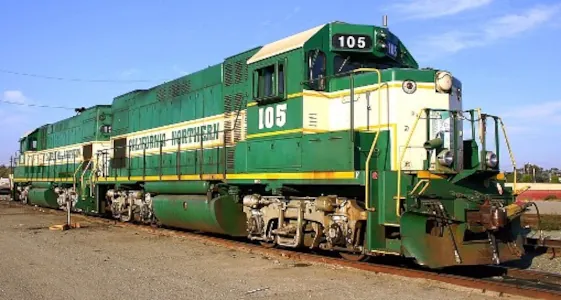
The California Northern Railroad workshops at American Canyon
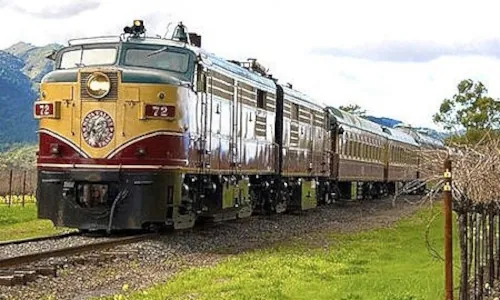
We end our day with a luxurious dinner onboard the
Napa Valley Wine Train - next photo
DESCRIPTIONS OF TODAY'S HIGHLIGHTS
** Amtrak’s Capitol Corridor is a 170-mile regional passenger train route running between San Jose in Silicon Valley and Auburn in the Sierra Foothills. It operates frequent, convenient daily service through the San Francisco Bay Area and Sacramento Valley as a comfortable alternative to congested highways. This corridor serves 18 stations across 8 counties. On weekdays there are 24 trains that operate between San Jose and Sacramento.
** The Western Railway Museum located in Solano County is a living history museum dedicated to preserving the state's electric railway and transit heritage. Visitors can explore historic exhibits, tour the archives, and enjoy scenic rides on vintage streetcars and interurban trains. The interurban ride is a picturesque 22-minute trip along the restored mainline of the old Sacramento Northern Railway The museum features an extensive collection of over 50 historic cars. This includes restored streetcars from San Francisco, interurban trains that once crossed the Bay Bridge, and retired BART cars. Spanning 22 acres, the grounds feature the F.M. Smith Memorial Library and Archives, large shaded picnic areas, and a museum store.
** The California Northern Railroad is a Class III short-line owned by Genesee & Wyoming Inc. It operates freight services over 233 track miles of leased former Southern Pacific Railroad lines, facilitating transloading, industrial development, and railcar storage. The CFNR operates in three main interconnected networks across Northern and Central California. We will be visiting the Suisun-Fairfield southwest to Napa Junction, south to Vallejo, and west to Schellville section.
** The Napa Valley Wine Train's dinner run is a luxury 36-mile round-trip journey departing from downtown Napa through iconic vineyards. Passengers are served a multi-course gourmet meal prepared fresh onboard restored 1900s Pullman cars, making it a highly romantic and scenic fine-dining experience. The train travels north through Yountville, Oakville, and Rutherford. While the sunset can be enjoyed during spring and summer rides, fall and winter trips often take place under the starlit sky.
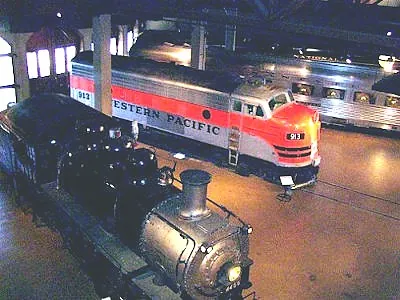
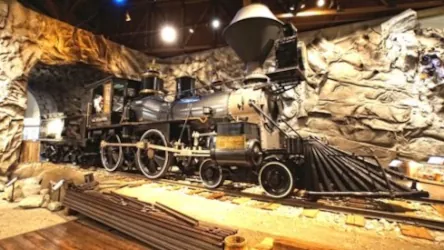
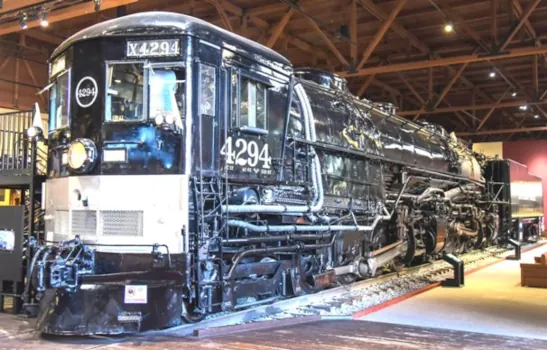
After breakfast at our hotel we depart at 9:00am and travel from Fairfield to Sacramento. We will be right at the doors of the California State Railroad Museum when it opens at 10:00am. This is a premier, world-class attraction in Sacramento’s historic Old Sacramento Waterfront. Spanning over 225,000 square feet, it celebrates the history and impact of the "iron horse" in the American West . This museum is considered one of the best railroad museums in the United States.
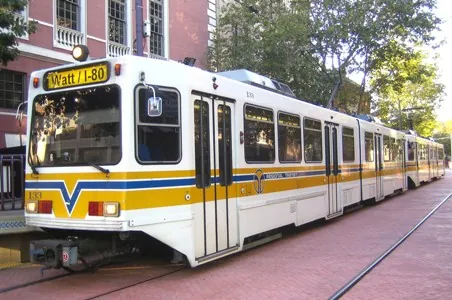
After a couple of hours at the railroad museum you can walk across the street in historic Old Sacramento and grab some lunch before we start our next adventure. About 1:00pm we will all meet at the near-by Sacramento Valley Station which is a short walk from Old Sacramento. Here we will board a light rail train on the Gold Line of the Sacramento Regional Transit District for a short 9 minute ride to the 16th street station. Here we will transfer to a Blue Line train for the 21 minute ride to the end of the line at Watt/I-80 Station. Our van will be waiting at this station. From here we head up into the Sierra Nevada Mountains to the town of Nevada City for our next attraction. Nevada City is in California, not Nevada.
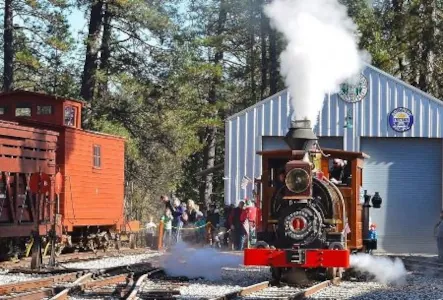
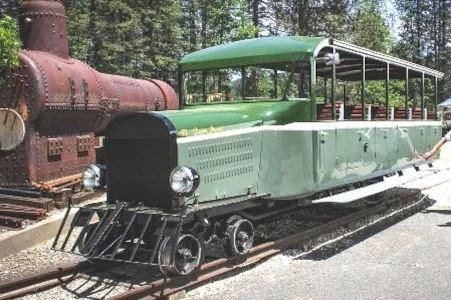
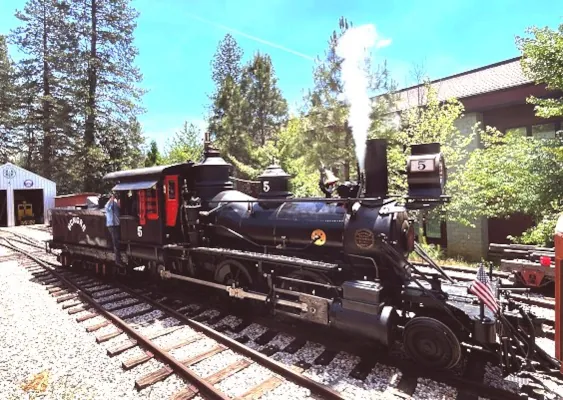
The Nevada County Narrow Gauge Railroad Museum in Nevada City preserves the history of the 3-foot narrow gauge line that operated from 1876 to 1942. It features vintage steam engines, a working restoration shop, and train rides. A rare, behind-the-scenes look where volunteers actively rebuild and restore vintage trains and cars. We will see restored locomotives , old west displays, and the Jeffery Steam Car—a steam automobile built in California in 1901. We have arranged for a special charter run on a classic 1920s gasoline-powered railbus through the forest. The railbus ride is a 1.8-mile excursion on a beautifully restored, open-air gasoline-powered vehicle. The loop takes passengers into the forested local woods, offering views of Gold Run Creek, a meadow, historic Indian grinding rocks, and an old mine shaft entrance. The route closely parallels portions of the original Nevada County Narrow Gauge Railroad line.
🍽 breakfast, dinner
THE FOLLOWING PHOTOS ARE AT THE CALIFORNIA STATE RAILROAD MUSEUM IN SACRAMENTO
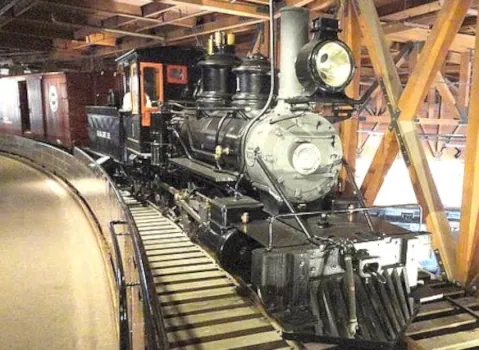
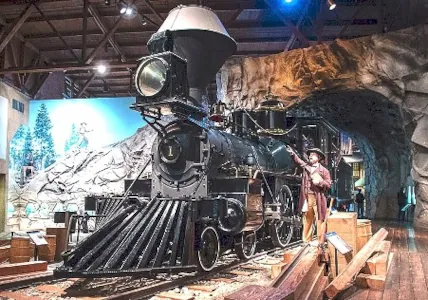
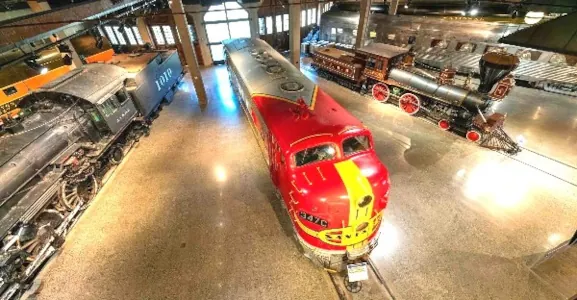
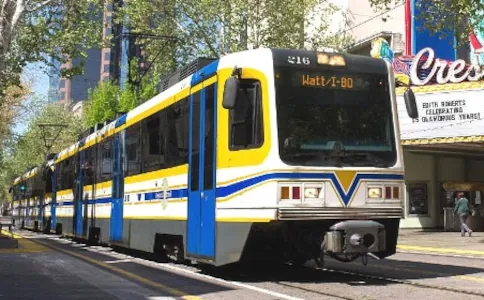
We take a ride on the Sacramento Regional Transit
District Blue Line to Watt Ave - next photo
THE PHOTOS BELOW ARE AT THE NEVADA COUNTY NARROW GAUGE MUSEUM IN NEVADA CITY, CALIFORNIA
After visiting the Nevada County Narrow Gauge Railroad Museum we spend the rest of the afternoon trackside on Donner Pass on the Union Pacific Railroad. BNSF and Amtrak also use this route. The railroad over Donner Pass is a monumental engineering marvel in the Sierra Nevada mountains, historically recognized as part of the First Transcontinental Railroad. Today, it remains a vital, heavily utilized, and challenging mainline for freight and passenger rail. On average 18 freights and two Amtrak passenger trains run over Donner Pass each day.
At the summit of Donner Pass is the famous Norden Snowsheds which are a massive system of protective tunnels built to combat severe snowfall. Donner Pass is one of the snowiest places in the contiguous United States averaging 34 feet per winter. We will stop at the Norden Snowshed and take a walk inside. We will also show you the old abandoned right-of-way and the many of the original snowsheds. A stop will also be made at the tunnel that replaced some of the snowsheds, now called “The Big Hole” From the west portal we can look through this 10,325 foot tunnel and see the east portal. If there happens to be a westbound train in the tunnel you can see the headlight as a small speak of light grow larger and larger. On the east side of Donner Pass we will make a stop at the old Southern Pacific Truckee Depot which is still used by Amtrak and is also now a tourist welcome center. There is a Southern Pacific caboose sitting next to the depot.
After departing Truckee we head north towards Portola and the Feather River Canyon. On our way we will stop in the small town of Sierraville to get some dinner at a local restaurant. After dinner we will be in Portola in 25 minutes and motel check-in at the 2 star Sierra Motel.
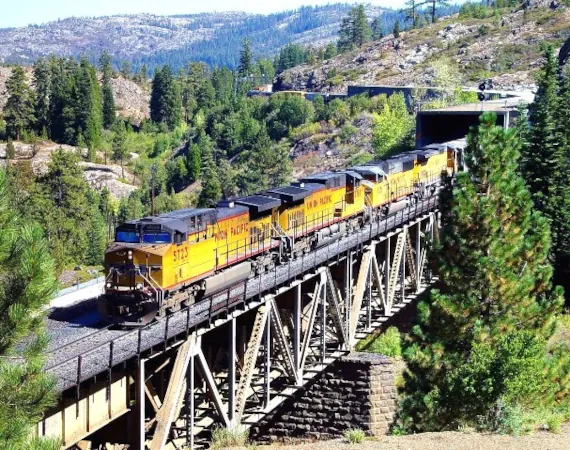
A Westbound Union Pacific freight at Shed 47 on Donner Pass
DESCRIPTIONS OF TODAY'S HIGHLIGHTS
** The California State Railroad Museum in Sacramento is a world-class Smithsonian Affiliate showcasing the railroads of the American West. This museum features restored locomotives, immersive exhibits and houses 21 meticulously restored locomotives and railroad cars. Some of the highlights include a Pullman-style sleeping car, lavish private cars, and equipment dating back to 1863. Visitors can explore the monumental task of building the Transcontinental Railroad via a full-scale diorama of a Sierra Nevada construction site. Other exhibits showcase the nation's most comprehensive toy train collection, California's citrus history, and the diverse labor force that built the tracks.
** The Sacramento Regional Transit District's Blue Line is a 21.8-mile, north-south light rail route connecting the Watt/I-80 station in the northeast corridor to Cosumnes River College in South Sacramento. It serves as a crucial transit backbone, passing through North Highlands, Downtown Sacramento, and the main university and college campuses. The complete system spans 43 miles across the greater Sacramento region serving 53 light rail stations. When counting the physical rails themselves including parallel tracks and double-tracked sections the system has approximately 83.9 track miles. The current network serves the area across three primary rail lines: the Blue Line, Gold Line, and Green Line.
** The Nevada County Narrow Gauge Railroad Museum in Nevada City, California, preserves the history of the 19th-century gold rush era. Run by passionate volunteers, this museum features meticulously restored steam engines, a working restoration shop, interactive exhibits, and vintage train excursions. The crown jewel is Engine #5 "The Tahoe", an 1875 Baldwin 2-6-0 Mogul. It is the oldest operating steam engine in America, famously retired to Hollywood and featured in several classic movies.
** The Donner Pass rail line is the original route over the 7,056-foot summit which was built in the 1860s by the Central Pacific Railroad which later became the Southern Pacific. Thousands of Chinese workers painstakingly chiseled through solid granite using blasting powder and hand tools, averaging just inches a day. The original route featured a system of eleven tunnels and impressive architectural feats like the dry-laid granite retaining walls known as the "Chinese Wall". In 1925, a parallel, 10,325-foot tunnel called the "Big Hole" was bored directly under Mt. Judah. In 1993, the original summit track over the top was abandoned, and modern, double-stack trains now utilize parallel tracks that burrow beneath the mountain. The Norden Snowsheds are a massive system of protective tunnels on the railroad. Built to combat severe snowfall at 7,000 feet, the modern concrete and steel structures replaced original timber sheds, keeping the vital transcontinental route open year-round. The complex at Norden is one of the most famous and highly engineered sections of mountain railroading in North America. In the late 1970s, the railroad replaced the timber snow sheds with heavy-duty concrete snow sheds. Norden historically featured a unique, completely enclosed 120-foot turntable used to turn massive "cab-forward" steam locomotives during the winter. This was covered by a wooden snowshed supported by steel truss bridges. The area once included employee quarters, a cookhouse, and a depot, all connected by covered tunnels and walkways so that workers didn't have to brave the severe winter weather.
After breakfast we will first visit the Western Pacific Railroad Museum located in Portola. The museum is closed to the public on Wednesday's but will open just for our group. Also special arrangements have been made to run a charter train just for our group around the museum grounds with cab rides for everyone in our group.
🍽 breakfast, lunch
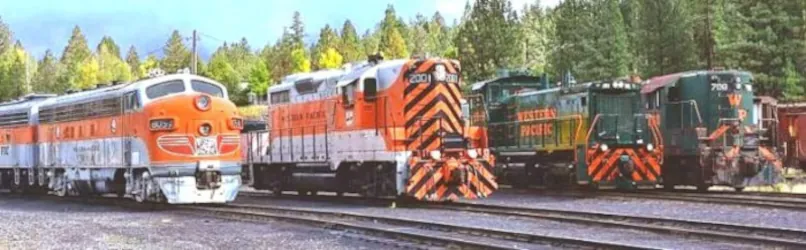
The Western Pacific Railroad Museum has 31 locomotives on display from diesel, electric, and
steam including the last Union Pacific DDA 40X Centennial diesel that EMD built - next 2 photos
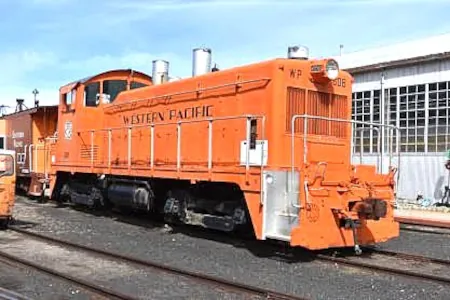
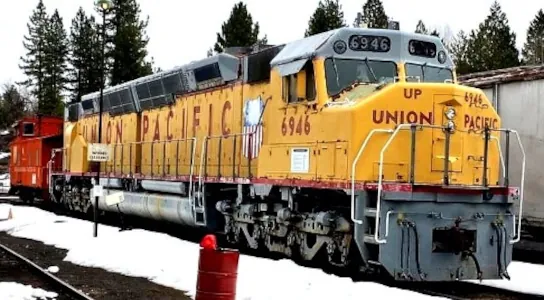
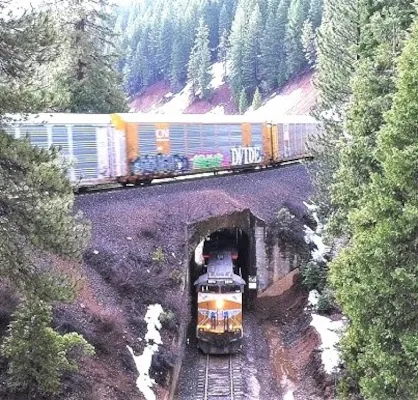
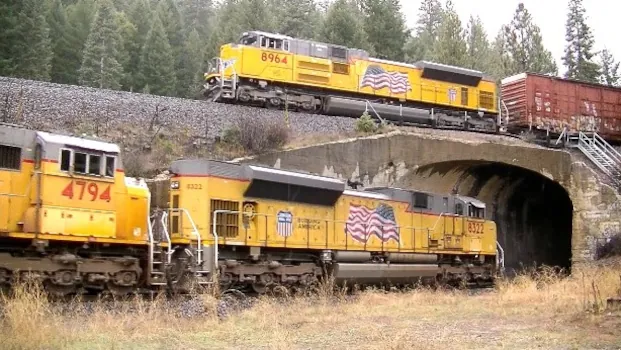
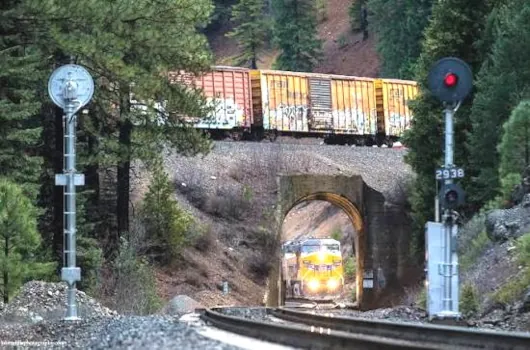
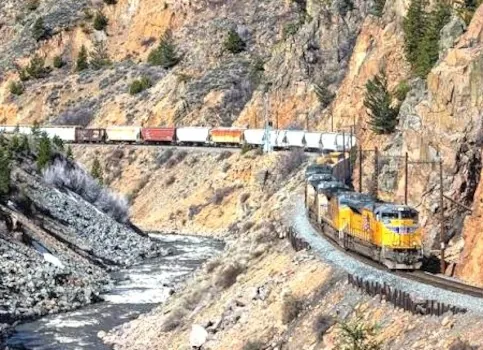
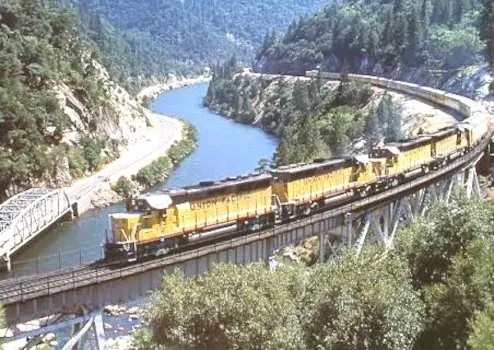
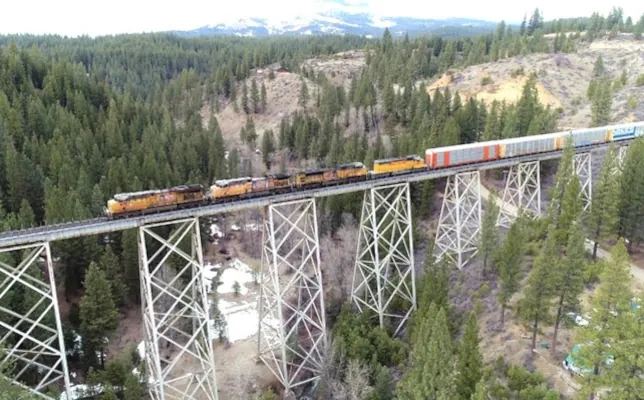
After our museum visit we will spend the balance of the day in the Feather River Canyon on the Union Pacific's Feather River Canyon mainline and the Inside Gateway on the BNSF. The Canyon is a railroad engineering marvel and scenic heavy-freight route in Northern California's Sierra Nevada mountains. Originally built by the Western Pacific Railroad to compete with Southern Pacific, it is now the Union Pacific Canyon Subdivision. Some of highlights that we will see include the Williams Loop which is a stunning, 360-degree rail spira where a mile-long freight train crosses entirely over its own path, the Keddie Wye a famous triangular junction where the main Feather River line splits, connecting to the former High Line running north toward Oregon, the. Pulga Bridges a striking structural arrangement where the red steel railway bridge crosses the river alongside and immediately below a massive highway bridge, and the Tobin & Clio Trestles.
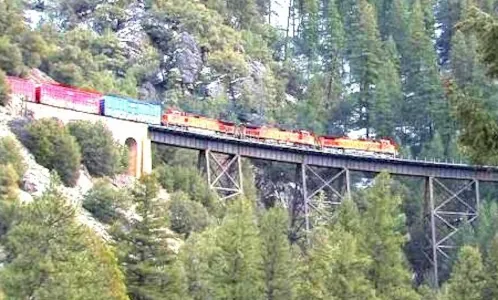
We will also spend time on the BNSF Gateway Subdivision, also historically known as the Inside Gateway. This is a remote, 203-mile, single-track mainline that runs between Klamath Falls, Oregon, and Keddie, California. This line was built by the Western Pacific and was sold by the Union Pacific to the BNSF.
We will make a stop at Quincy to photograph the Quincy Railroad which is a shortline of only 3 miles serving the Sierra Pacific Lumber Mill. The railroad has two diesels, one being a EMD SW1200 and the other is an EMD SW7. Loaded cars of lumber are taken to Quincy Junction in the afternoon to be picked up by the Union Pacific. 2nd nights lodging at the Sierra Motel in Portola.
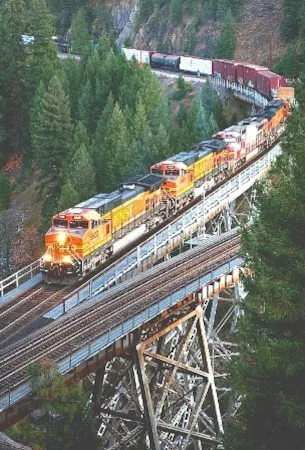
THE KEDDIE WYE BRIDGE IN THE FEATHER RIVER CANYON
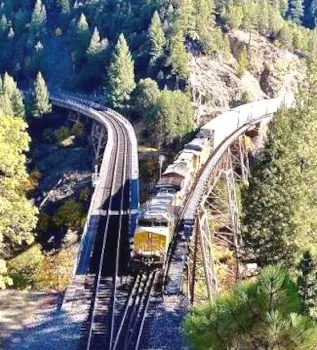
BNSF and Union Pacific westbound
trains on the Keddie Wye Bridge -
next photo
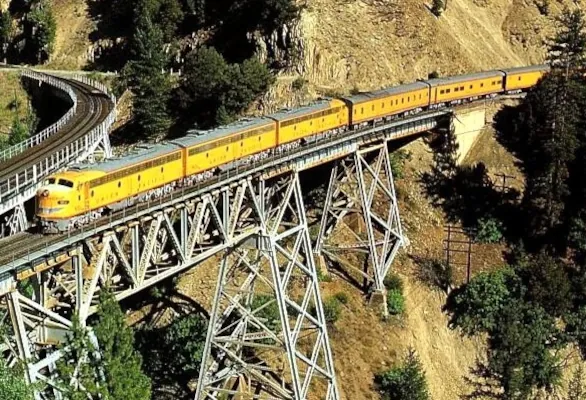
A westbound Union Pacific Passenger Special
on the Keddie Wye Bridge
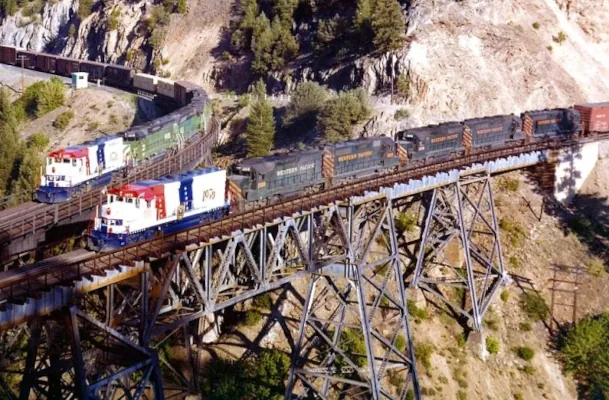
In 1976 Western Pacific Public Relations Department staged the two
Bicentennial diesels two westbound trains on The Keddie Wye Bridge
WILLIAMS LOOP IN THE UPPER FEATHER RIVER CANYON
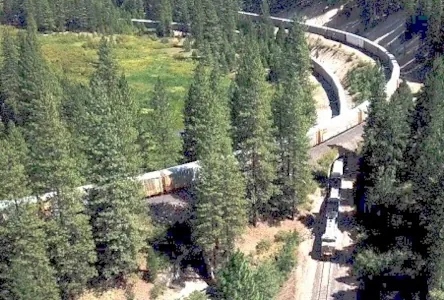
If a train is one mile or longer it will loop
over itself at Williams Loop - next 4 photos
THE NORTH FORK BRIDGE LOWER FEATHER RIVER CANYON
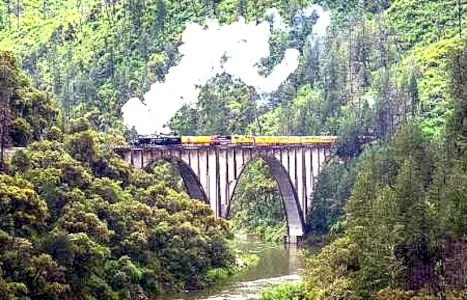
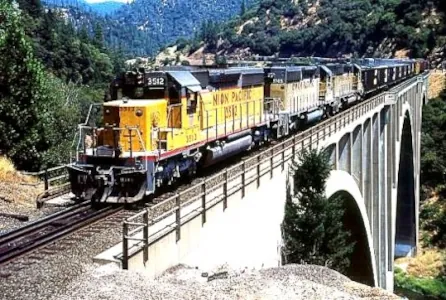
THE UNION PACIFIC BIG BOY STEAM LOCOMOTIVE TRAIN
AT THE PULGA BRIDGES IN THE FEATHER RIVER CANYON
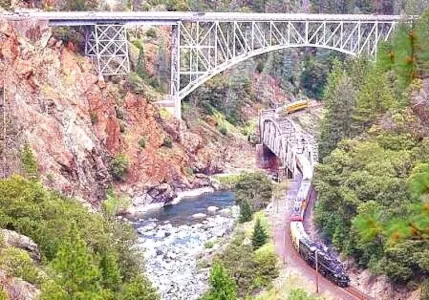
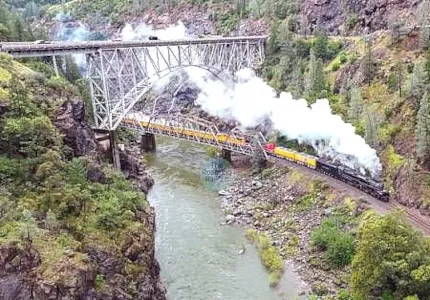
ACTION IN SERPENTINE CANYON LOCATED WITHIN
THE FEATHER RIVER CANYON AND THE ROCK CREEK BRIDGE
THE CLIO BRIDGE VIADUCT JUST WEST OF PORTOLA
THE BNSF INSIDE GATEWAY IN THE FEATHER RIVER CANYON
AND THE QUINCY RAILROAD ALSO LOCATED IN THE CANYON
DESCRIPTIONS OF TODAY'S HIGHLIGHTS
** The Western Pacific Railroad Museum in Portola is located at a former Western Pacific locomotive facility, adjacent to the Union Pacific's mainline through the Feather River Canyon. The museum holds in its collection twenty-nine diesel locomotives, one electric locomotive, one steam locomotive fifteen passenger cars including four from the well-known California Zephyr, numerous freight and maintenance cars, and eighteen cabooses. This museum has one of the larger collections of early diesel era locomotives and freight cars in North America. The museum is often considered to have one of the most complete and historic collections of equipment and materials from the Western Pacific Railroad. Among the significant pieces in the museum collection are Western Pacific 805-A, an FP7 model passenger locomotive that pulled the California Zephyr; Southern Pacific EMD GP9 #2873, nicknamed "the Kodachrome" due to it being painted with the Kodachrome scheme from the failed Santa Fe–Southern Pacific merger; WP 2001, the first GP20 locomotive built, WP 501, the first diesel purchased by the Western Pacific; WP 0-6-0 steam locomotive 165, an oil burning switch engine built by ALCO in 1919; and WP 3051, one of only two remaining GE U30B locomotives.
** The Feather River Canyon mainline of the former Western Pacific Railroad has a rare, gentle 1% maximum grade for trains travelling between the Central Valley and Nevada. The line is internationally famous among railfans for its dramatic canyon scenery, rushing river views, and "Seven Wonders of the Railroad World". The biggest attraction in the Feather River Canyon is the famous Keddie Wye which is a Y-shaped railroad junction. Built in 1909 it is the only Wye on Earth where two of its three legs are carried on massive steel bridges that converge inside a mountain tunnel. Built in 1909, this west leg of the Wye spans 569 feet and sits 176 feet above the canyon floor. The Indian Creek Bridge was built in 1931 as part of the "Inside Gateway" expansion. This north leg of the Wye stretches 447 feet and stands 118 feet high. It is actively used by both the Union Pacific Railroad and BNSF Railway, allowing trains to travel east-west through the Feather River Canyon or branch north toward Bieber, California.
** The "Inside Gateway" (historically known as "The Highline") is a vital 203-mile BNSF Railway route connecting Klamath Falls, Oregon, to Keddie, California. Running through remote high-desert and mountainous terrain, it serves as a crucial corridor for freight like lumber, agricultural products, and intermodal shipments. Originally carved out of the wilderness in 1931 by the Great Northern and Western Pacific railroads, the route bypasses the congested coastal lines. BNSF's Gateway Subdivision now runs through. The single-track mainline is heavily rugged, featuring elevations exceeding 4,000 feet, steep grades up to 2.2%, and sharp curves. On an average day BNSF operates two trains in each direction.
** The Quincy Railroad is a short-line terminal railroad in the Feather River Canyon operating 3.27 miles of track. It functions primarily to transport freshly cut lumber from the Sierra Pacific Industries mill in Quincy to the Union Pacific mainline at Quincy Junction. The Quincy Railroad offers a fascinating study of short-line logistics and the historic ties between rail and forestry in California. The line is owned and operated by Sierra Pacific Industries, which accounts for over 1,000 carloads of lumber each year.
After breakfast we travel 50 miles south to Truckee and board the westbound California Zephyr for the ride over Donner Pass. This train is due in Truckee at 10:33am and arrives in Sacramento at 3:05pm. Since Amtrak's westbound California Zephyr has a poor on-time performance into Sacramento of only 40% our arrival will most likely be later than 3:05pm. This train does have a full service dining car so you may want to get lunch while traveling over Donner Pass.
🍽 breakfast
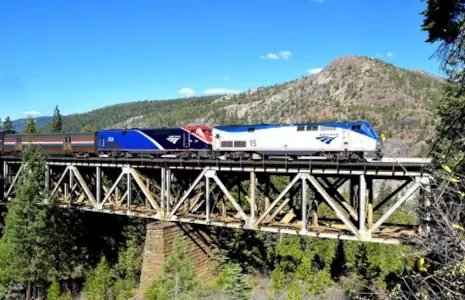
Amtrak's California Zephyr Crossing
Donner Pass - next phot
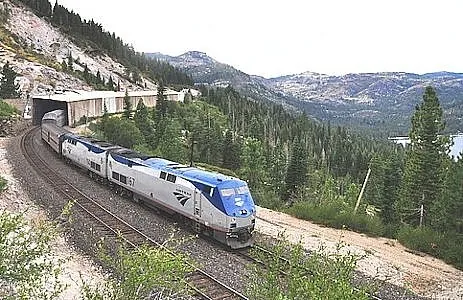
From Sacramento we travel to Stockton by highway which will take approximately 45 minutes. Depending upon how late the California Zephyr is running if we have the extra time we will catch one of the Altamont Corridor Express (ACE) commuter trains arriving in Stockton which is coming from San Jose. The arrival times for the last three trains into Stockton is at: 5:47pm, 6:47pm and 7:47pm. ACE is a commuter rail service connecting Stockton and San Jose. Hotel check-in at the 3 star Best Western Plus Heritage Inn, Stockton.
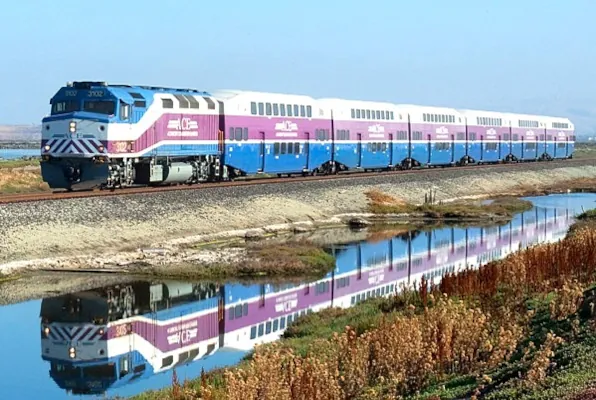
Altamont Corrider Express commuter train in the San Joaquin Valley
DESCRIPTIONS OF TODAY'S HIGHLIGHTS
** Riding the Amtrak's California Zephyr from Truckee to Sacramento is a spectacular descent from the Sierra Nevada peaks to the sunny Central Valley. The 130-mile journey winds through historic Donner Pass, offering sweeping, panoramic views of alpine lakes and dramatic, steep canyons. You leave the charming mountain town of Truckee at an elevation of nearly 6,000 feet. The route immediately hugs the rushing Truckee River as the train quickly climbs toward Donner Pass. As you approach summit, you’ll look down upon the sparkling waters of Donner Lake and pass through a series of snowsheds and tunnels. The tracks wind through dense pine forests and over massive trestle bridges, shedding elevation into the rolling foothills before flattening out into the agricultural, valley landscape. The sightseer lounge car is the highlight of the trip, featuring floor-to-ceiling windows to take in the mountainous vistas.
** The Altamont Corridor Express (ACE) commuter service operates four trains in the morning to San Jose and four in the afternoon back to Stockton. It provides a stress-free, traffic-bypassing transit option for Central Valley residents commuting into the Silicon Valley. ACE operates primarily during peak weekday commute hours. The full trip from Stockton to San Jose takes about 2 hours and 15 minutes. These trains stop at Stockton, Lathrop/Manteca, Tracy, Vasco Road, Livermore, Pleasanton, Fremont, Santa Clara, and San Jose. The trains are built for commuter comfort and productivity, utilizing Bombardier bi-level passenger coaches pulled by MPI F40PH and Siemens Charger SC-44 diesel locomotives.
After breakfast at the hotel we will visit the two local railroads based in Stockton. The Central California Traction Railroad and the Stockton Terminal & Eastern Railroad. Both have their diesel workshops and headquarters in Stockton. The CCT has 3 diesels working 55 miles of track. They have an EMD SW1200, EMD GP 18 and Brookville BL20CG. The ST&E has 4 locomotives which are EMD SW1200, EMD MP15DC, ALCO S-2 and a Genset engine working 25 miles of track.
🍽 breakfast, lunch
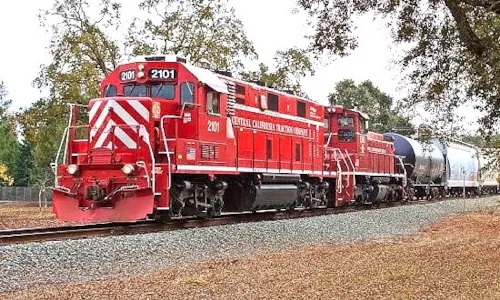
Working in and around Stockton is the Central California
Traction Railroad
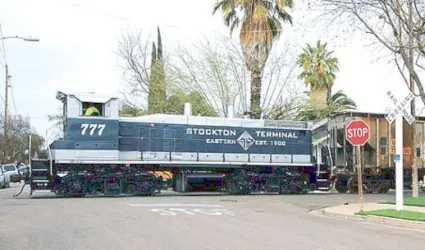
Stockton Terminal & Eastern Railroad
Amtrak operates 10 Gold Runner passenger trains through Stockton everyday. Our tour plan is to ride train 712 departing Stockton at 2:05pm and arriving at Modesto at 2:35pm. This is a 27 mile ride in 30 minutes.
In Modesto we will visit the Modesto and Empire Traction Railroad which has 5 miles of mainline and 50 miles of industrial track with 12 locomotives. They include EMD SW1500, GE 70 Ton and Railpower RP20 series genset.
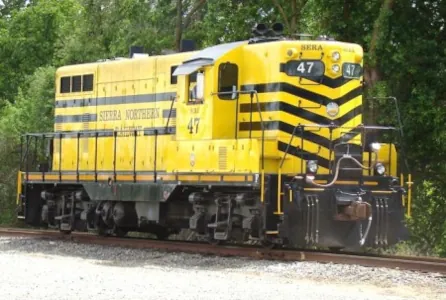
Departing Modesto it is a short ride to Oakdale where the Sierra Railroad's Oakdale operations are located. This operates under the name of Sierra Northern Railway on 54 miles of track using 5 diesels in these models: EMD GP9, GP9u, GP20 and Railpower RP20 series genset.
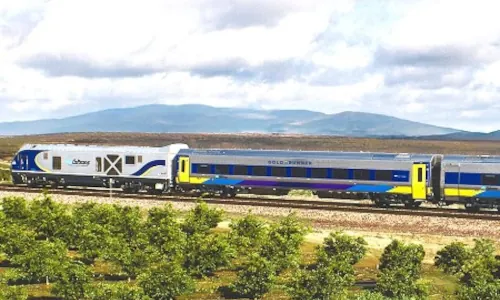
Amtrak's new Gold Runninr Train in the San Joaquin Valley
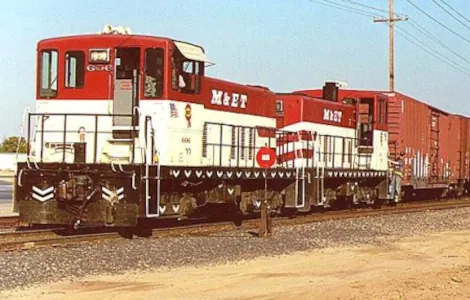
Modesto & Empire Traction Railroad
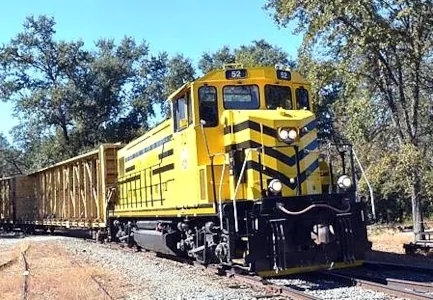
The Sierra Northern Railway based out of
Oakdale - next photo
Finally we continue east up into the High Sierra foothills to the town of Jamestown. This small historic town was once the headquarters, yards and roundhouse to the Sierra Railroad. In 1982 they sold it to the State of California and now it is called “Railtown 1897 State Historical Park” We will visit here tomorrow.
Hotel check-in at the 3 star Gunn House Hotel in Sonora. After getting settled into our rooms we can go to the historic downtown area of Jamestown for dinner.
DESCRIPTIONS OF TODAY'S HIGHLIGHTS
** The Central California Traction Company is a short-line railroad in San Joaquin County jointly owned by the Union Pacific and BNSF. Operating primarily as a switching and terminal railroad, it provides freight services, interchanging with both major Class I carriers. The CCT operates freight services primarily between Stockton and Lodi and manages the Stockton Public Belt Railway at the Port of Stockton. The CCT has 3 diesel engines. This railroad was a famous interurban line founded in 1905, which originally used electrified third-rail technology to connect Stockton, Lodi, and Sacramento. Following the decline of passenger interurban services, the line was completely dieselized in 1946 and converted exclusively to freight.
** The Stockton Terminal & Eastern Railroad (STE) is a 25-mile short-line railroad operating with 4 diesel engines in the greater Stockton area. Owned and operated by OmniTRAX, the railway provides vital freight service to multiple industries, including agriculture, food processing, steel, and renewable fuels. The STE connects directly with the BNSF Railway, the Union Pacific Railroad, and the Central California Traction Company.
** The Gold Runner (formerly known as the Amtrak San Joaquins) is a 365-mile passenger train network running between the San Francisco Bay Area, Sacramento, and Bakersfield. 14 trains operate daily in both directions.
** The Modesto & Empire Traction Company (MET) is a highly efficient, family-owned short-line railroad in Modesto. Spanning just 5 miles of main track, it manages an additional 50 miles of industrial track with 12 diesel engines. It connects BNSF Railway and Union Pacific.
** The Sierra Northern Railway's Oakdale Division operates a 54-mile short-line freight and excursion route stretching from Oakdale into California's historic Gold Country using 5 locomotives. It serves a crucial role in local commerce by interchanging heavy agricultural and industrial freight with major carriers like the Union Pacific and BNSF railways. The Oakdale area is the historic and geographic anchor of Sierra Northern's regional footprint.
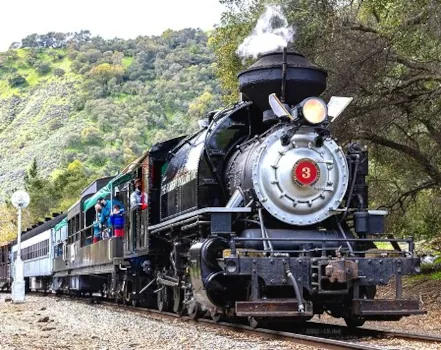
After breakfast at a local restaurant we will visit Railtown 1897 State Historic Park which is located in Jamestown. This is a unique 26-acre park that preserves the historic and fully functioning Sierra Railway locomotive and maintenance facility. The park opens at 9:30am which will give you enough time to take a tour of the old roundhouse which was built in 1910 before the excursion train departs. The first train of the day is scheduled to depart Jamestown at 10:30am pulled by steam locomotive No. 3, a 4-6-0 built by Rogers Locomotive and Machine Works in 1891 and is called the Movie Star Locomotive as the ten-wheeler has starred in over 100 movies. We will take a ride out onto the former Sierra Railroad mainline pull by No. 3. You also have the option to follow the train and get some pictures trackside if you choose. After the train returns to Jamestown we will need to get into our van and head for Sunol in Niles Canyon which is across the San Joaquin Valley. We will have a picnic type lunch in the van as we travel west towards the San Francisco Bay Area. We will be very tight on time.
🍽 breakfast, lunch
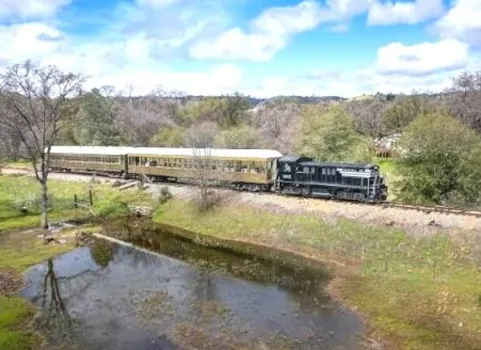
Railtown 1897 State Park with a diesel pulling the
excursion train - next photo
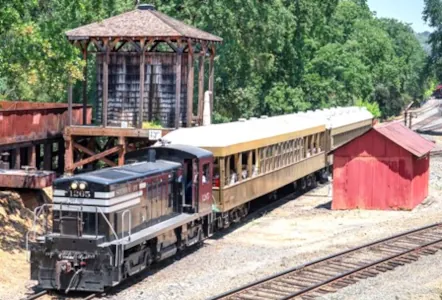
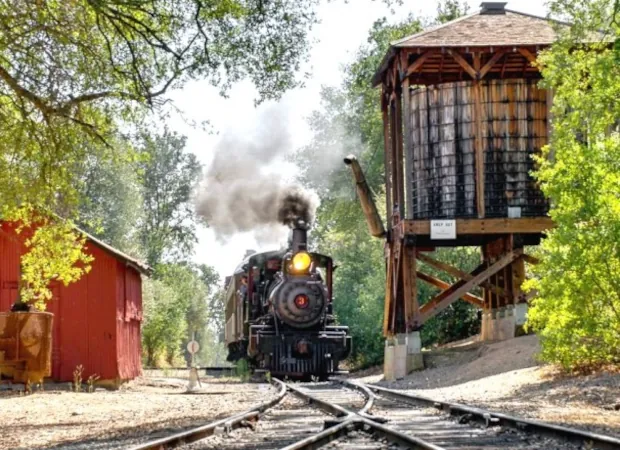
Sierra Railroad No. 3 the famous “Movie Locomotive” is
arriving at Railtown 1897
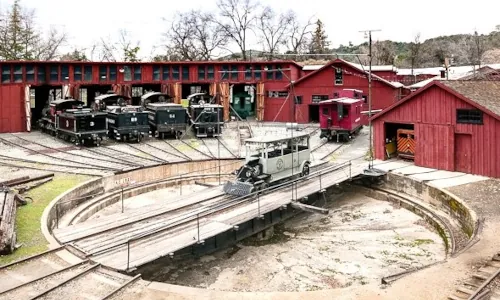
The former Sierra Railroad turntable and roundhouse
in Jamestown
We will arrive at Sunol several minutes after the Niles Canyon Railroad excursion train departs but we can photograph this train at a couple scenic locations in the canyon. Today's excursion will be diesel pulled, but we will return tomorrow as this excursion train will be steam pulled. The Niles Canyon Railway is an operating historic railroad museum running along a portion of the original First Transcontinental Railroad in California. Operated by the Pacific Locomotive Association the line through the canyon is 9 miles.
THE NILES CANYON RAILROAD IS OPERATED BY
THE PACIFIC LOCOMOTIVE ASSOCIATION (next 5 photos)
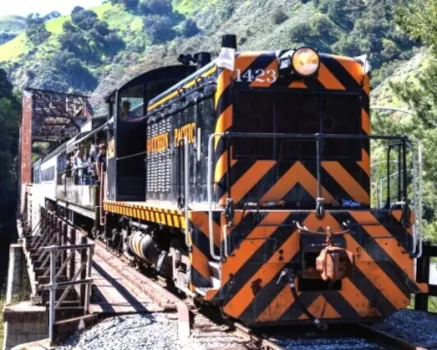
Railtown 1897 State Park with a diesel pulling the
excursion train - next photo
Sierra Railroad No. 3 the famous “Movie Locomotive” is
arriving at Railtown 1897
The former Sierra Railroad turntable and roundhouse
in Jamestown
The former Sierra Railroad turntable and roundhouse
in Jamestown
From Sunol we will travel by highway to near-by Dublin where we will take a ride on the Bay Area Rapid Transit (BART) from the Dublin/Pleasanton station which is the end of the Blue Line all the way to downtown San Francisco via Oakland. Shortly after departing Oakland the train will dip down into the Transbay Tube running under the San Francisco Bay. We will get off at the very first station in San Francisco which is at the Embarcadero. This will be a 55 minute ride and the train will travel 31 miles. At The Embarcadero we come up to street level and board one of the historic street cars on the San Francisco Muni Railway for the ride along the Embarcadero to Fisherman's Wharf. From this station our hotel is a couple of blocks away.
Check-in at the 3 star Hotel Holiday Inn Express Fisherman's Wharf. You can get unpacked and clean-up and grab some dinner either at the hotel restaurant or a near-by restaurant. At 7:00pm we will all meet in the hotel lobby to get ready for our next adventure.
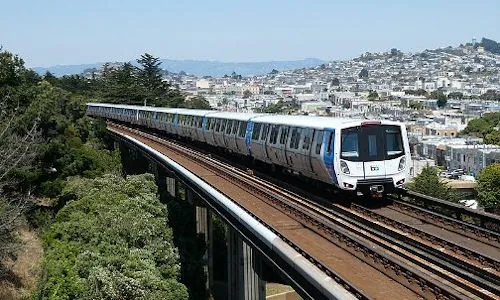
Bay Area Rapid Transit (BART) train approaching Oakland
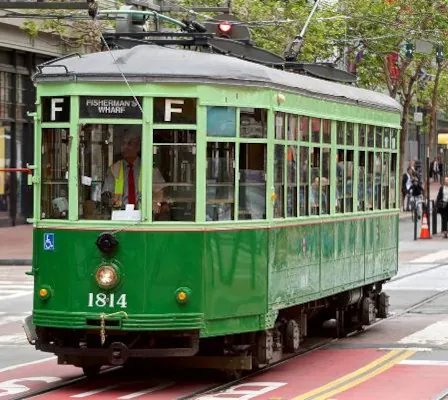
San Francisco Muni Railway historic street
cars running to Fisherman's Wharf - next 3 photos
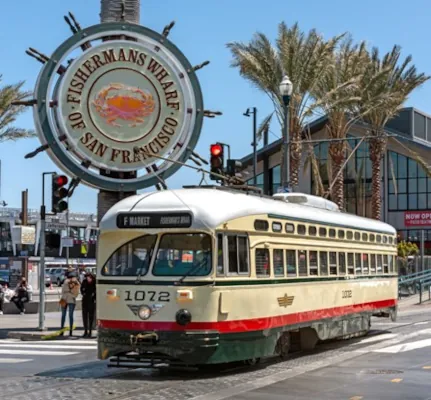
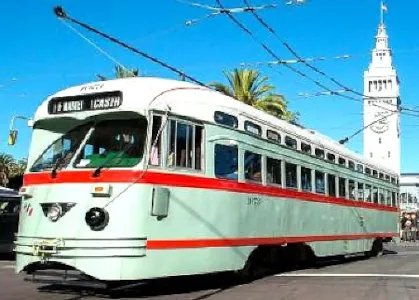
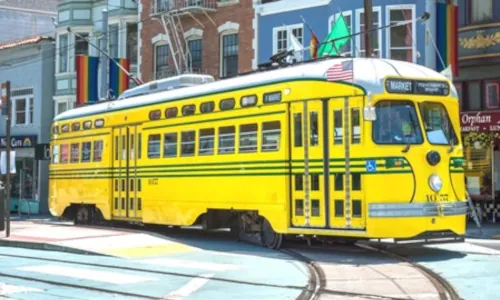
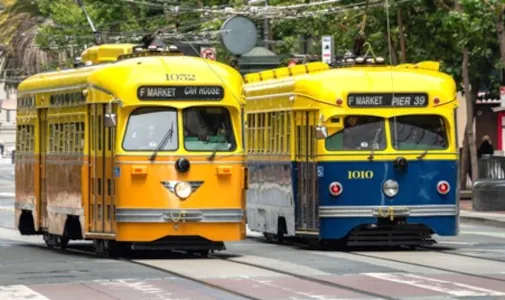
San Francisco has a fleet of 52 vintage Street Cars from all
around the USA and the World - next photo
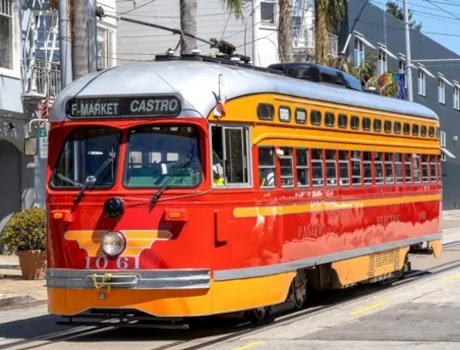
On our next rail adventure we will walk to the SF Muni Street car station and ride a vintage car. The SF Muni Railway has a wonderful collection of 52 vintage street cars from 32 cities around the Union States and 9 countries. From Fisherman's Wharf we ride the street car all the way uptown to the famous Haight-Ashbury Castro District. This area of the city is a thriving neighborhood where cultures and eras meld together. Made famous by the hippie movement of the 1960's. Haight-Ashbury was once home to the revolutionaries, famous singers including the Grateful Dead and Janis Joplin and of course cult leaders. On the corner of Castro and Market Streets we go underground and catch one of the newer muni trams that will take us back to downtown at Market & Powell Streets. Back up to street level we then catch one of the famous San Francisco cable cars for the exciting ride back to Fisherman's Wharf and our hotel.
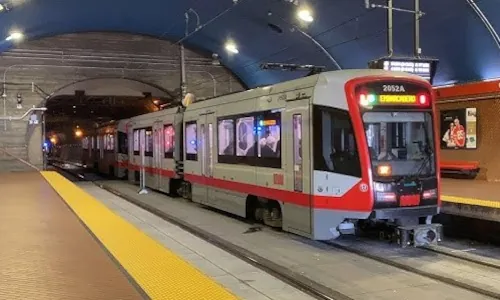
We ride one of the newer Muni trams from the Castro
District back to downtown
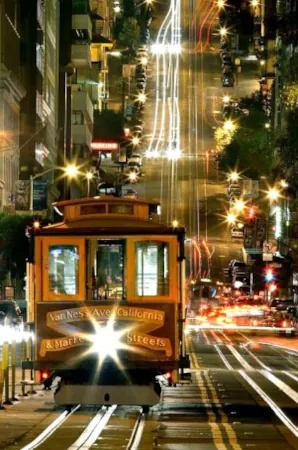
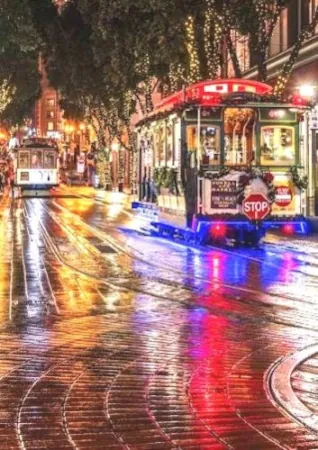
We enjoy a spectacular nightime
ride on the San Francisco Muni's
Cable Cars - next photo
DESCRIPTIONS OF TODAY'S HIGHLIGHTS
** Railtown 1897 State Historic Park and the former Sierra Railroad station, workshops and yards is known as "The Movie Railroad," The Sierra Railroad has starred in hundreds of Hollywood movies and television shows. The centerpiece of the park is an intact, working roundhouse with an operational turntable. It is one of the only places in the United States where steam locomotives are still repaired and maintained using turn-of-the-century machinery. The site earned its nickname by providing the backdrop for classics like High Noon, Back to the Future Part III, The Virginian, Kansas Pacific, The Lone Ranger, Gunsmoke, The Wild Wild West, Rawhide, and Petticoat Junction to name a few. Visitors can see classic movie props and recognizable shooting locations throughout the park. No. 3 a 4-6-0 built by Rogers Locomotive and Machine Works in 1891 has been the stair of the Sierra Railroad and Railtown 1897. Originally designed to haul heavy freight through the Sierra Nevada foothills, she was converted from coal to oil in the early 1900s. After receiving a massive overhaul that included replacing its original boiler, she returned to active service in 2010 and remains fully operational today.
** The Niles Canyon Railway is an operating historic railroad museum running through spectacular Niles Canyon on the same right-of-way that the original First Transcontinental Railroad ran on in the 1860's. Between Sunol and Niles is 8.5 miles and it is operated by the Pacific Locomotive Association. Their roster of steam, diesel, railcars, and cabooses is impressive.
Steam Locomotives
Robert Dollar Co. #3 2-6-2 Prairie type built by Baldwin Locomotive Works in 1927.
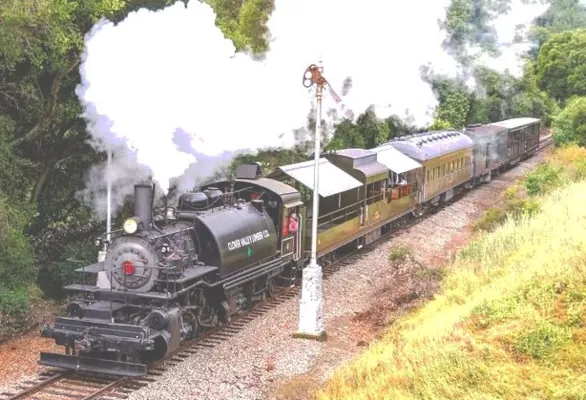
Clover Valley Lumber Co. #4 2-6-2 Prairie type built by Baldwin in 1924.
Quincy Railroad #2 2-6-2T built by Baldwin in 1924.
Sierra Railway #30 2-6-2 built by Baldwin in 1922
Southern Pacific #1744 2-6-0 Mogul built by Baldwin in 1901.
Southern Pacific #2479 4-6-2 Heavy Pacific built by Baldwin in 1923.
Diesel Locomotives
Western Pacific #713 EMD GP 7
United States Army #1856 Fairbanks-Morse H12-44
Southern Pacific #1218 ALCO S-6 switcher
Southern Pacific #9010 Krauss-Maffei diesel-hydraulic
Southern Pacific #673 & #694 EMD FP7s.
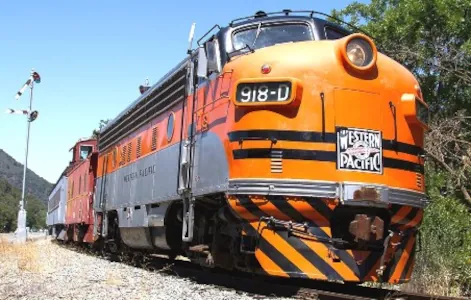
Western Pacific #918D EMD F7A
Railbuses / Railcars
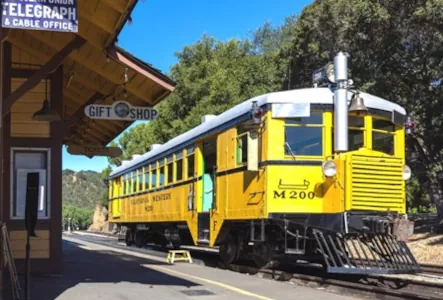
California Western M200 Railbus
Great Northern Ranch Car #1242
** BART (Bay Area Rapid Transit) is the primary heavy-rail, rapid-transit system connecting San Francisco with the broader East Bay, South Bay, and Peninsula. It features 50 stations across 131 miles of track, providing commuters and travelers with a fast, high-capacity, and traffic-free way to navigate the Bay Area
** San Francisco’s Municipal Railway (Muni) operates a renowned transit fleet divided into two main categories which are historic, surface-level streetcars and modern, underground light rail vehicles. The fleet is made up of vintage PCC cars from the 1940s and 1950s, 1928 "Peter Witt" cars from Milan, Italy, and restored antique streetcars dating back to 1912. Primarily running on the famous F Market & Wharves line, these streetcars travel from the Castro district, down Market Street, and along the Embarcadero to Fisherman’s Wharf. Many of the PCC cars are painted in vibrant, historic "tribute liveries" representing dozens of different transit agencies from across the United States.
** The SF Muni Railway Modern Light Rail (Muni Metro) fleet is made up of high-capacity Siemens S200 light rail vehicles that operate on both city streets and underground subways. The routes consists of several lines designated by letters like the J Church, K Ingleside, L Taraval, M Ocean View, N Judah, and T Third Street. These vehicles travel above ground as streetcars in residential neighborhoods, but dip underground when they reach the Market Street subway system to act as a rapid transit train.
** The Muni operates the world's last manually operated cable car system. Running continuously since 1873, these historic cars navigate the city's steepest hills by gripping constantly moving steel cables buried beneath the street. The system features three distinct routes which are the Powell-Hyde Line, the Powell-Mason Line and the California Street Line.
After breakfast at the hotel we again take a ride on one the famous San Francisco Cable Cars, this time on a different route than what we rode on last night. When our Cable Car passes the San Francisco Muni Railway Car Barn we will jump off and visit the very interesting Muni Cable Car Museum. Here at the historic Cable Car Barn & Powerhouse we can view the actual cable winding machinery from an elevated gallery, as well as the path of the cable entering the building and leaving underneath the street. On display are various mechanical devices, such as grips, track, trucks, cable, brake mechanisms and some of the first cable cars.
After our museum visit we travel by highway south and into the Santa Cruz Mountains to the small town of Felton. A mile from Felton is the old logging village of Roaring Camp. We will first get some lunch while we wait for the Roaring Camp & Big Trees Railroad excursion train pulled by a geared steam locomotive to arrive from Bear Mountain. We are scheduled on the 1:30pm excursion. Our train will take us over trestles, through towering redwood groves and up a winding narrow-gauge grade to the summit of Bear Mountain and return. Also located at Roaring Camp is the standard gauge Santa Cruz, Big Trees & Pacific Railway. This railroad has two diesels which are from the Santa Fe Railway. Before Santa Fe retired them they were converted from a EMD F7 to a CF7. There should be at least one of the diesels here as the other one is down in the town of Santa Cruz with an excursion train.
🍽 breakfast, lunch
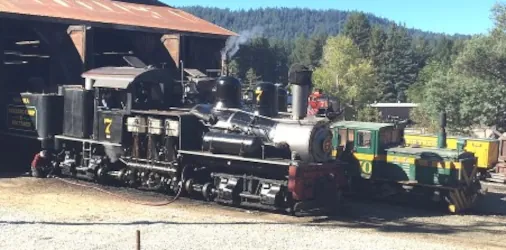
The Roaring Camp & Big Trees workshop
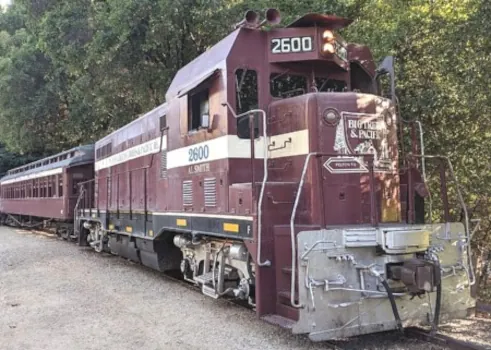
Santa Cruz, Big Trees & Pacific Railway
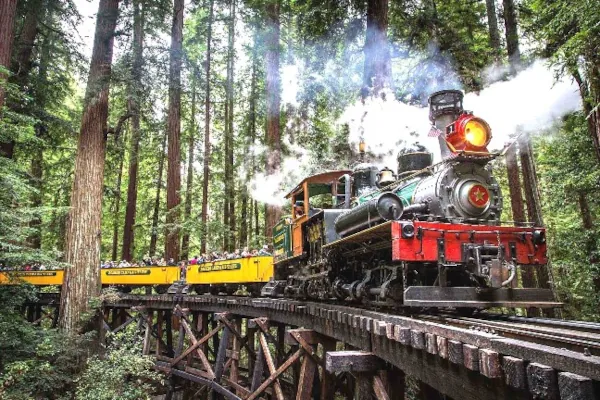
Roaring Camp & Big Trees Railroad excursion train in the Redwood Trees
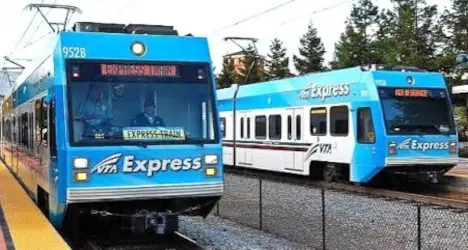
Santa Clara Valley Transportation Authority (VTA)
light rail trams - next photo
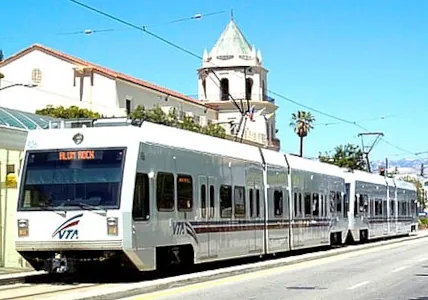
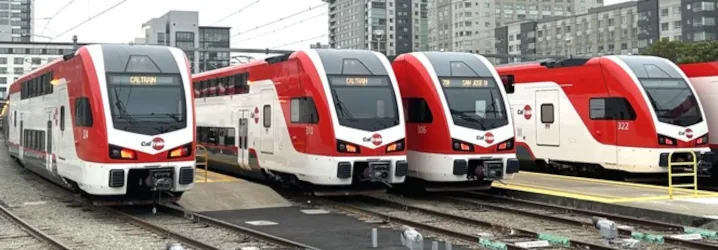
Line up of Caltrain commuter trains at the South San Francisco Station
Departing Roaring camp we leave the Santa Cruz Mountains and return to Silicon Valley and the San Jose area to the town of Campbell which will take us about one hour. Here we will board the Santa Clara Valley Transportation Authority (VTA) light rail tram on the Green Line at the Winchester Station. Our 55 minute tram ride will take us across the Santa Clara Valley to the station of Old Ironsides which is in the city of Santa Clara and the end of the Green Line. Here we transfer to another tram on the Orange Line for the short ride of 24 minutes to the end of this line at the town of Mountain View. This is the transfer point for the Caltrain commuter rail line serving the San Francisco Peninsula and Santa Clara Valley.
We will have a 15 minute wait for a northbound Caltrain to arrive. Step onboard the new fully electric trains that went into operate in late 2024. These new trains are known as Stadler KISS Electric Multiple Units (EMUs) We will take a 42 minute ride north to the station of San Bruno which is 12 miles south of San Francisco. Here we transfer to our waiting van.
From San Bruno we head directly to the famous Golden Gate Bridge and into Golden Gate National Recreation Area just prior to sunset. From an overlook high above the bridge we can get some great photos of not only the most famous bridge in North America but the San Francisco skyline in the background.
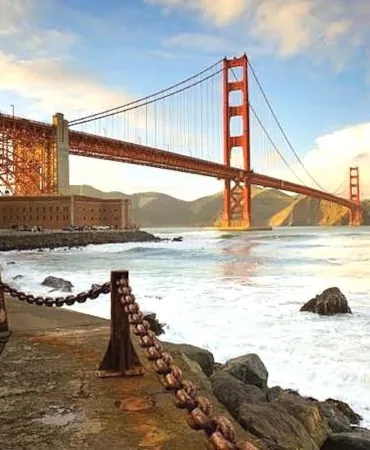
San Francisco's Golden Gate Bridge
late afternoon
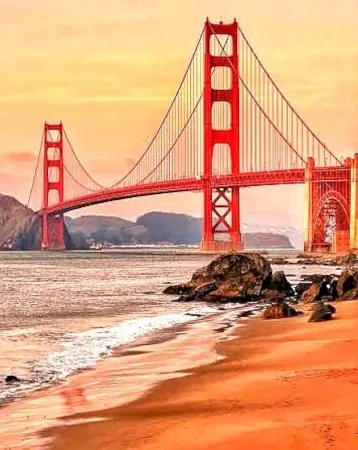
San Francisco's Golden Gate Bridge
at sunset
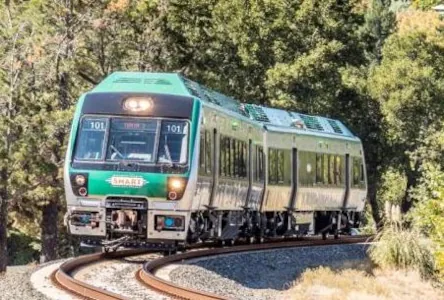
Sonoma-Marin Area Rail Transit (SMART) new
operations and trains using the former
Northwestern Pacific Railroad right-of-way -
next photo
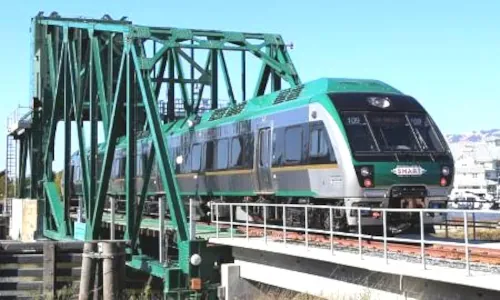
After taking some spectacular photos of the Golden Gate Bridge and San Francisco we will continue northbound for 30 minutes to the town of Larkspur. Here we will pay a visit to our last railroad on our tour. The SMART (Sonoma-Marin Area Rail Transit) system is a 48-mile passenger rail project in Northern California's San Francisco Bay Area. Connecting 14 stations from Windsor in the north to the Larkspur Ferry Terminal in the south. There is a light rail train scheduled to depart at 8:09pm and we can photograph it at the Larkspur Station.
After this train departs from Larkspur we travel 15 minutes south to the historic town of Sausalito to have our Farewell Dinner. Our California Rail Spectacular has covered hundreds of miles between Southern and Northern California and has visited and rode on many railroads and visited several interesting railroad museums. As we enjoy our final dinner we can reflect on the high points of our tour. After dinner we return to San Francisco crossing over the Golden Gate Bridge and back to our hotel for the 2nd night.
DESCRIPTIONS OF TODAY'S HIGHLIGHTS
** The Cable Car Museum offers a fascinating insight into the history and mechanics of San Francisco's famous cable car system. Located in the Nob Hill neighborhood, the museum features historic cable cars, photographs, and exhibits on the technology that powers the system. Visitors can view the machinery that pulls the cables along the tracks and learn about the vital role these cars have played in the city's development.
** The Roaring Camp & Big Trees Railroad operates on 3 foot gauge and has a interesting roster of motive power. In the 1880s, narrow-gauge steam locomotives were used to haul giant redwood logs out of the mountains. Roaring Camp’s steam engines date from 1890 and are among the oldest and most authentically preserved narrow-gauge steam engines providing regularly scheduled passenger service in America. Among geared locomotives, three companies Shay, Heisler and Climax are widely credited with dominating the logging and industrial marketplace. Shay locomotives were designed in 1872 particularly for Western U.S. logging operations. Roaring Camp Railroads owns Shay locomotives, a Heisler, a Climax, and five diesel engines.
** The Santa Cruz, Big Trees & Pacific Railway is also located at Roaring Camp and operates the historic 8-mile route between Felton (Roaring Camp) and Santa Cruz, tracing California’s oldest railroad line from the redwood forests to the Pacific Ocean. Passengers can ride vintage diesel-pulled trains between Roaring Camp and the Santa Cruz Beach Boardwalk.
THE ROSTER
Dixiana 3 a 1912 Lima Shay
Tuolumne 2 an Lima 1899 Shay
Kahuku 3 an 1890 Baldwin 0-4-2T
No. 3 a Heisler locomotive
Waipahu 4 1890 Baldwin 0-4-2T
Bloomsburg 5 1912 Heisler
No. 3 1926 Climax
Plymouth Diesel
Whitcomb 45 ton switcher
The standard gauge Santa Cruz, Big Trees & Pacific Railway
CF 7 2600 former ATSF F7
CF 7 2641 former ATSF F7
** The Santa Clara Valley Transportation Authority (VTA) is the primary public transit agency for Santa Clara County. It operates an extensive network of a 42-mile light rail system and oversees mobility across 15 cities, including San Jose, Sunnyvale, and Santa Clara. The Light Rail Vehicles of VTA's rail fleet consists of 77 active, low-floor Kinki Sharyo cars. They operate out of the Guadalupe Operating Division in San Jose.
Caltrain is a commuter rail system serving the San Francisco Peninsula and Silicon Valley, running between San Francisco and San Jose, with weekday commuter extensions down to Gilroy. The system operates on a modern, fully electrified corridor using sleek, high-performance Stadler KISS electric trains, offering riders frequent, clean, and fast daily transit. Caltrain serves 31 active stations across San Francisco, San Mateo, and Santa Clara counties.
** The Golden Gate Bridge is an iconic 1.7-mile suspension bridge in connecting San Francisco to Marin County. Famous for its Art Deco styling and distinctive "International Orange" color, it features a 4,200-foot main span and towers soaring 746 feet above the strait. Completed in 1937, it is celebrated as an engineering marvel. The vibrant "International Orange" was specifically chosen to contrast with the deep blue waters and to ensure high visibility in the area's notorious fog.
** The new SMART (Sonoma-Marin Area Rail Transit) is California's newest commuter rail system that is not complete yet. It is being built using the former Northwestern Pacific Railroad right-of-way. The NWP ran it's last freight train in early 1998 and passenger service ended in November 1958. Most of the rail and ties were still there but needed to be totally rebuilt for light rail commuter trains and new freight service. Currently there are 14 stations on 48 miles of track in operation. Once completed the system will be 70 miles total. The light rail trains uses sleek, clean-diesel multiple-unit (DMU) Japanese-built trains that comfortably seat up to 158 passengers.
After breakfast check-out and end of our tour.
🍽 breakfast
TOUR CONDITIONS PRICING - PLEASE READ CAREFULLY
Tour Pricing:
All tour prices are subject to change without notice, at any time. All prices based on double room occupancy. We reserve the right to change tour prices if it becomes necessary and is beyond our control. If payments are made by credit card a 3% conveyance fee will be added.